
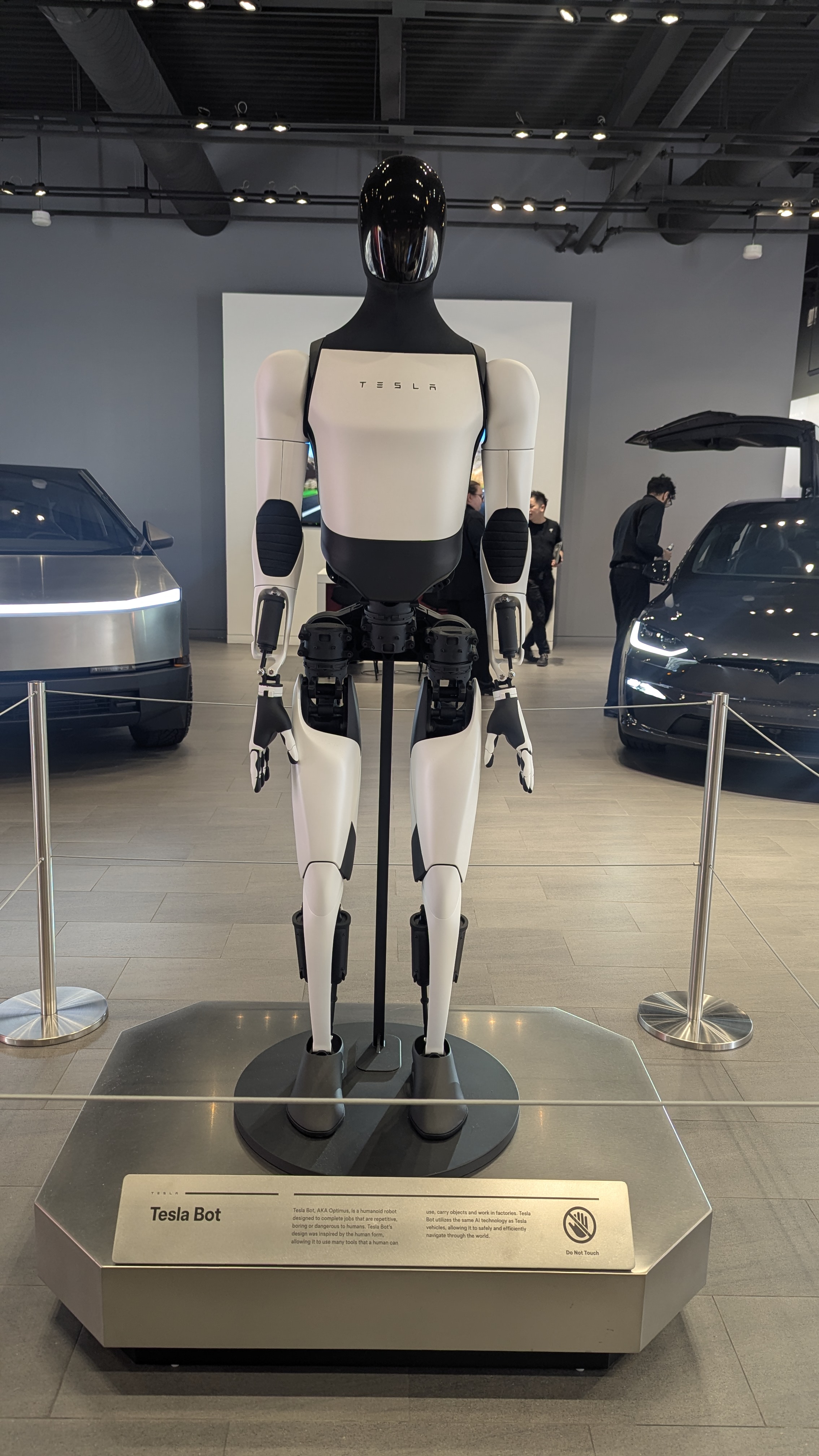
Tesla's Optimus Robot Nears Mass Production, Promising $5.4B Market Growth by 2026
Beyond dance moves, the humanoid's AI and dexterity signal a tangible step towards home assistance for aging Americans.
The direct answer
Tesla's Optimus robot, demonstrated with advanced AI and surprising dance moves at AWE 2026, is poised for mass production by the end of the year, potentially ushering in an era where humanoid robots assist older adults aging in place. This development comes as the humanoid robot market is projected to surge from $5.41 billion in 2026 to over $50 billion by 2035
GOOD NEWS 🤖 According to exclusive report by MarketsandMarkets™, the humanoid robot market is projected to skyrocket from $5.41 billion in 2026 to $50.27 billion by 2035—compounding at a massive 28.1% annually 📈 With Optimus in mass production by the end of this year, Tesla…
— Ming link
. The robot's improved dexterity, handling delicate objects like eggs and tying shoelaces, along with its ability to learn through observation powered by Dojo chip AI, suggests practical applications for daily tasks that could alleviate burdens on caregivers and enhance independence for seniors
"The third-generation Optimus features significant upgrades over previous versions: Dexterity: 37 degrees of freedom, with hand positioning accuracy of 0.08mm, enabling delicate operations like handling eggs and tying shoelaces; Endurance: Capable of continuous operation for up to 24 hours; Learning ability: Equipped with Dojo chip-powered AI that allows observational learning—watching human demonstrations to acquire new skills without traditional programming"
.
Dexterity Meets AI: A New Era of Assistance?
The third-generation Optimus robot is not just about flashy demonstrations; its technical specifications reveal a significant leap in capability. With 37 degrees of freedom and hand positioning accuracy of 0.08mm, Optimus can handle tasks requiring fine motor skills, such as manipulating eggs or tying shoelaces
"The third-generation Optimus features significant upgrades over previous versions: Dexterity: 37 degrees of freedom, with hand positioning accuracy of 0.08mm, enabling delicate operations like handling eggs and tying shoelaces; Endurance: Capable of continuous operation for up to 24 hours; Learning ability: Equipped with Dojo chip-powered AI that allows observational learning—watching human demonstrations to acquire new skills without traditional programming"
. This level of dexterity, combined with Dojo chip-powered AI enabling observational learning, means the robot can acquire new skills by watching humans, a stark contrast to traditional, complex programming. This adaptability is key to its potential as a household assistant, capable of learning and performing a variety of daily chores that could benefit older adults aging in place.
The Road to Mass Production: Challenges and Timelines
Tesla aims for mass production of Optimus by the end of 2026, a timeline that, while ambitious, is generating significant market anticipation [c1, c3]. The humanoid robot market is already projected to skyrocket, with estimates placing it at $5.41 billion in 2026 and $50.27 billion by 2035
GOOD NEWS 🤖 According to exclusive report by MarketsandMarkets™, the humanoid robot market is projected to skyrocket from $5.41 billion in 2026 to $50.27 billion by 2035—compounding at a massive 28.1% annually 📈 With Optimus in mass production by the end of this year, Tesla…
— Ming link
. However, challenges remain. Companies like Tesla, planning for a million-unit production line, face hurdles in commercialization and scaling
"A slew of remaining challenges will complicate most plans for commercialization by companies such as Tesla, which plans to build a one-million-unit production line and eventually make tens of millions per year."
. The critical question is whether Optimus will be ready for widespread household adoption, offering genuine utility beyond factory floors, by the time production ramps up.
Beyond the Novelty: Practical Applications for Seniors
While a robot dancing like Michael Jackson might grab headlines
"In this video, we break down everything Tesla showcased at one of the world's biggest electronics exhibitions—from Optimus dancing like Michael Jackson to its incredible AI-powered capabilities and what Elon Musk's mass production plans could mean for the future."
, the true impact of Optimus for older adults lies in its potential to assist with daily living. Imagine Optimus helping with meal preparation, fetching items, or even providing physical support. Its endurance, capable of 24-hour continuous operation, and its learning ability suggest it could become an invaluable companion and helper for those who wish to age in place. This isn't just about convenience; it's about maintaining independence and dignity, a prospect that could redefine elder care.
Common mistakes
- Focusing solely on the 'wow' factor of dance routines.
The entertainment value of Optimus's dance moves distracts from its more significant potential as an assistive technology for daily tasks, particularly for older adults. - Treating Optimus as purely a consumer gadget.
While consumer applications exist, the most impactful immediate use case for advanced humanoid robots like Optimus may be in elder care and assisted living, offering practical support for aging in place. - Underestimating the challenges of mass production and commercialization.
Despite ambitious timelines, scaling production and ensuring safety and reliability for household use present significant engineering and regulatory hurdles that need careful consideration.
GOOD NEWS 🤖 According to exclusive report by MarketsandMarkets™, the humanoid robot market is projected to skyrocket from $5.41 billion in 2026 to $50.27 billion by 2035—compounding at a massive 28.1% annually 📈 With Optimus in mass production by the end of this year, Tesla…
— Ming link
, the real value lies in Optimus's demonstrated dexterity and observational learning capabilities
"The third-generation Optimus features significant upgrades over previous versions: Dexterity: 37 degrees of freedom, with hand positioning accuracy of 0.08mm, enabling delicate operations like handling eggs and tying shoelaces; Endurance: Capable of continuous operation for up to 24 hours; Learning ability: Equipped with Dojo chip-powered AI that allows observational learning—watching human demonstrations to acquire new skills without traditional programming"
. These features, far from being mere novelties, represent a tangible step towards robots that can assist with the daily tasks many older adults struggle with, potentially easing the strain on families and offering a new avenue for independent living.
Frequently asked
When is Tesla Optimus expected to be available for mass production?
Mass production of the Tesla Optimus robot is reportedly slated to begin by the end of 2026, according to on-site staff reports.
What are the projected market sizes for humanoid robots?
The humanoid robot market is projected to grow from $5.41 billion in 2026 to $50.27 billion by 2035, indicating significant expected expansion.
What specific capabilities make Optimus suitable for elder assistance?
Optimus's advanced dexterity for delicate tasks, 24-hour endurance, and observational learning AI allow it to adapt to and perform various daily chores relevant to aging in place.
Sources



More from robots-trope → · Back to Perch · Browse all stories