
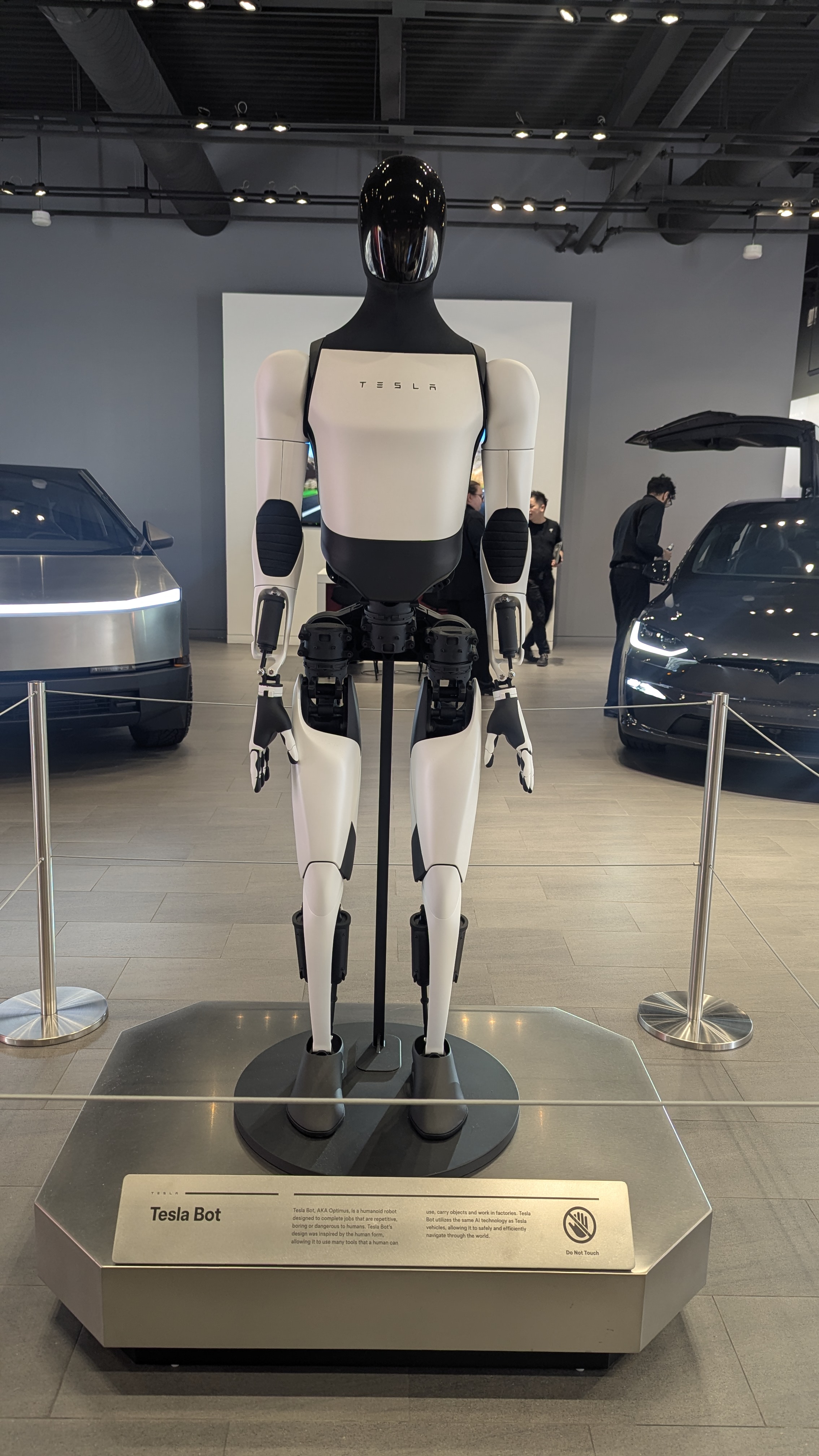
Tesla's Optimus Robot: The Future of Aging-in-Place, Not Just Factories
Mainstream media focuses on factory floors, but the real revolution is in enabling seniors to live independently.
The direct answer
While mainstream coverage of Tesla's Optimus Gen 3 production ramp-up centers on its potential for factory automation and data collection
"Current Optimus units remain restricted to internal R&D and factory data collection. Tesla is repurposing a Fremont assembly line to commence low-volume Optimus production."
, the true, unaddressed impact lies in its accelerating capability for elder care and aging-in-place. The humanoid robot market is projected to explode, from $5.41 billion in 2026 to $50.27 billion by 2035
GOOD NEWS 🤖 According to exclusive report by MarketsandMarkets™, the humanoid robot market is projected to skyrocket from $5.41 billion in 2026 to $50.27 billion by 2035—compounding at a massive 28.1% annually 📈 With Optimus in mass production by the end of this year, Tesla…
— Ming link
. Tesla is strategically positioning Optimus not just for industrial tasks but as a future household assistant. This pivot, driven by advanced software and increasing production volume, directly addresses the growing need for in-home support for seniors. The potential for Optimus to help older Americans remain in their homes longer is significant
"Tesla Optimus Gen 3 is the most credible attempt anyone has yet made at building a robot that could help older Americans stay in their own homes. longer"
, a narrative largely missed by initial reports focused solely on manufacturing efficiency. The focus on internal data collection is a precursor to broader applications, with production lines being installed in Fremont for volume output
"In the Q1 earnings call on April 22, 2026, Elon Musk said that Optimus v.3 will be unveiled closer to production start. Tesla said "First-generation production lines for Optimus are being installed" in Fremont "in anticipation of volume production"."
.
The Overlooked Aging-in-Place Revolution
The mainstream narrative around Tesla's Optimus Gen 3 production ramp-up is narrowly focused on its role in factory automation and data collection
"Current Optimus units remain restricted to internal R&D and factory data collection. Tesla is repurposing a Fremont assembly line to commence low-volume Optimus production."
. However, this overlooks a seismic shift in its potential application. The humanoid robot market is projected to surge from $5.41 billion in 2026 to over $50 billion by 2035
GOOD NEWS 🤖 According to exclusive report by MarketsandMarkets™, the humanoid robot market is projected to skyrocket from $5.41 billion in 2026 to $50.27 billion by 2035—compounding at a massive 28.1% annually 📈 With Optimus in mass production by the end of this year, Tesla…
— Ming link
, a growth trajectory fueled by demographic needs. Tesla's investment in installing production lines in Fremont signals a commitment to volume, moving beyond R&D. This scaling is critical for Optimus to transition from industrial environments to personal assistance, directly addressing the growing demand for elder care. The potential for Optimus to facilitate independent living for seniors is immense, offering a tangible solution to the challenges of aging populations
"Tesla Optimus Gen 3 is the most credible attempt anyone has yet made at building a robot that could help older Americans stay in their own homes. longer"
.
Market Signals Point to Elder Care
While Tesla itself is focusing on internal data collection for Optimus
"Current Optimus units remain restricted to internal R&D and factory data collection. Tesla is repurposing a Fremont assembly line to commence low-volume Optimus production."
, external market signals are loudly broadcasting its potential for elder care. The rapid growth projected for the humanoid robot market
GOOD NEWS 🤖 According to exclusive report by MarketsandMarkets™, the humanoid robot market is projected to skyrocket from $5.41 billion in 2026 to $50.27 billion by 2035—compounding at a massive 28.1% annually 📈 With Optimus in mass production by the end of this year, Tesla…
— Ming link
isn't solely driven by manufacturing efficiency. Consider the anecdotal evidence: a caretaker robot for seniors recently launched, experienced website crashes due to overwhelming pre-orders, and received significant interest from nursing homes for B2B contracts
2 days ago, we launched our caretaker robot for seniors. here are my observations: we got so many pre-orders that our website broke. the more interesting fact: a lot of nursing homes also reached out asking for B2B contracts. we're lining up huge pilots, and some are even…
— Audrey link
. This isn't a niche demand; it's a massive, underserved market. The development of robots like Optimus, alongside others like Figure's F.02, is directly linked to increasing global aging trends and shifting caregiving dynamics
"As global aging trends increase and family caregiving dynamics shift, robots like Tesla's Optimus and Figure's F.02 are being developed to assist with household chores, health monitoring, and even social companionship."
. The industry's continued focus on industrial applications feels like a deliberate sidestep from the more impactful, socially relevant use case.
Production Ramp-Up: More Than Just Assembly
Tesla CEO Elon Musk has indicated that Optimus v.3 is nearing completion, with production set to begin in Summer 2026 and high-volume output following
"At the 2026 Abundance Summit on March 12, CEO Elon Musk described Optimus 3 as being in the "final stages" of completion and stated production would begin in Summer 2026, with high-volume production — tens of thousands of units — to follow in 2027."
. This isn't just about building more robots for factories; it's about creating a platform for widespread adoption. The installation of first-generation production lines in Fremont is a clear indicator of Tesla's intent to scale Optimus for volume production
"In the Q1 earnings call on April 22, 2026, Elon Musk said that Optimus v.3 will be unveiled closer to production start. Tesla said "First-generation production lines for Optimus are being installed" in Fremont "in anticipation of volume production"."
. This scaling is precisely what's needed for Optimus to become a viable, affordable solution for personal assistance, particularly for seniors. The technology is maturing rapidly, moving from final stages of completion
"At the 2026 Abundance Summit on March 12, CEO Elon Musk described Optimus 3 as being in the "final stages" of completion and stated production would begin in Summer 2026, with high-volume production — tens of thousands of units — to follow in 2027."
to mass production, making the vision of robots assisting in homes a tangible reality sooner than many realize.
Common mistakes
- Focusing solely on factory applications
The mainstream media's fixation on Optimus for factory floors ignores the significant and growing market for elder care and aging-in-place solutions, which the robot's capabilities are uniquely suited to address. - Underestimating the market demand for elder care robots
The rapid growth projected for the humanoid robot market, coupled with anecdotal evidence of overwhelming demand for senior-focused robots, indicates a massive, underserved need that Tesla's Optimus is poised to fill. - Treating Optimus as a purely industrial tool
While initial production focuses on internal data and factory tasks, the underlying advancements in AI and robotics are directly transferable to personal assistance, making the aging-in-place narrative a critical, albeit overlooked, aspect of Optimus's future.
"Current Optimus units remain restricted to internal R&D and factory data collection. Tesla is repurposing a Fremont assembly line to commence low-volume Optimus production."
, a standard tech-industry diversion tactic to downplay more profound societal implications. This focus conveniently ignores the burgeoning demand for elder care solutions. As the humanoid robot market is set to skyrocket
GOOD NEWS 🤖 According to exclusive report by MarketsandMarkets™, the humanoid robot market is projected to skyrocket from $5.41 billion in 2026 to $50.27 billion by 2035—compounding at a massive 28.1% annually 📈 With Optimus in mass production by the end of this year, Tesla…
— Ming link
, Tesla's advancements in Optimus Gen 3 are not just about efficiency; they are a direct response to the aging global population and the strain on family caregivers
"As global aging trends increase and family caregiving dynamics shift, robots like Tesla's Optimus and Figure's F.02 are being developed to assist with household chores, health monitoring, and even social companionship."
. This robot is poised to become the most credible solution for enabling seniors to stay in their homes longer
"Tesla Optimus Gen 3 is the most credible attempt anyone has yet made at building a robot that could help older Americans stay in their own homes. longer"
, a market segment that early adopters are already signaling immense interest in, with one caretaker robot company seeing its website crash due to pre-orders and inquiries from nursing homes
2 days ago, we launched our caretaker robot for seniors. here are my observations: we got so many pre-orders that our website broke. the more interesting fact: a lot of nursing homes also reached out asking for B2B contracts. we're lining up huge pilots, and some are even…
— Audrey link
.
Frequently asked
When is Tesla Optimus Gen 3 expected to be in production?
According to reports, Optimus v.3 is in the final stages of completion, with production anticipated to begin in Summer 2026. High-volume production, potentially in the tens of thousands, is expected to follow in 2027 [c6].
What is the projected market size for humanoid robots?
The humanoid robot market is projected for substantial growth, estimated to increase from $5.41 billion in 2026 to $50.27 billion by 2035, with a significant annual compound growth rate of 28.1% [c1].
How does Optimus relate to aging-in-place?
Optimus's advanced capabilities in dexterity, mobility, and AI are seen as highly credible for assisting older adults with daily tasks, helping them maintain independence and remain in their homes longer [c4]. This is a key, yet often overlooked, application.
Sources
- MarketsandMarkets™ projection via X post
- Caretaker robot market demand via X post
- Optimus factory data collection via Octagon AI
- Optimus for aging-in-place via Independent Analyst
- Optimus production lines via Tesla Q1 earnings call transcript
- Optimus Gen 3 production timeline via Abundance Summit
- Aging trends and robot development via AARP



More from Technology & Society → · Back to Perch · Browse all stories