
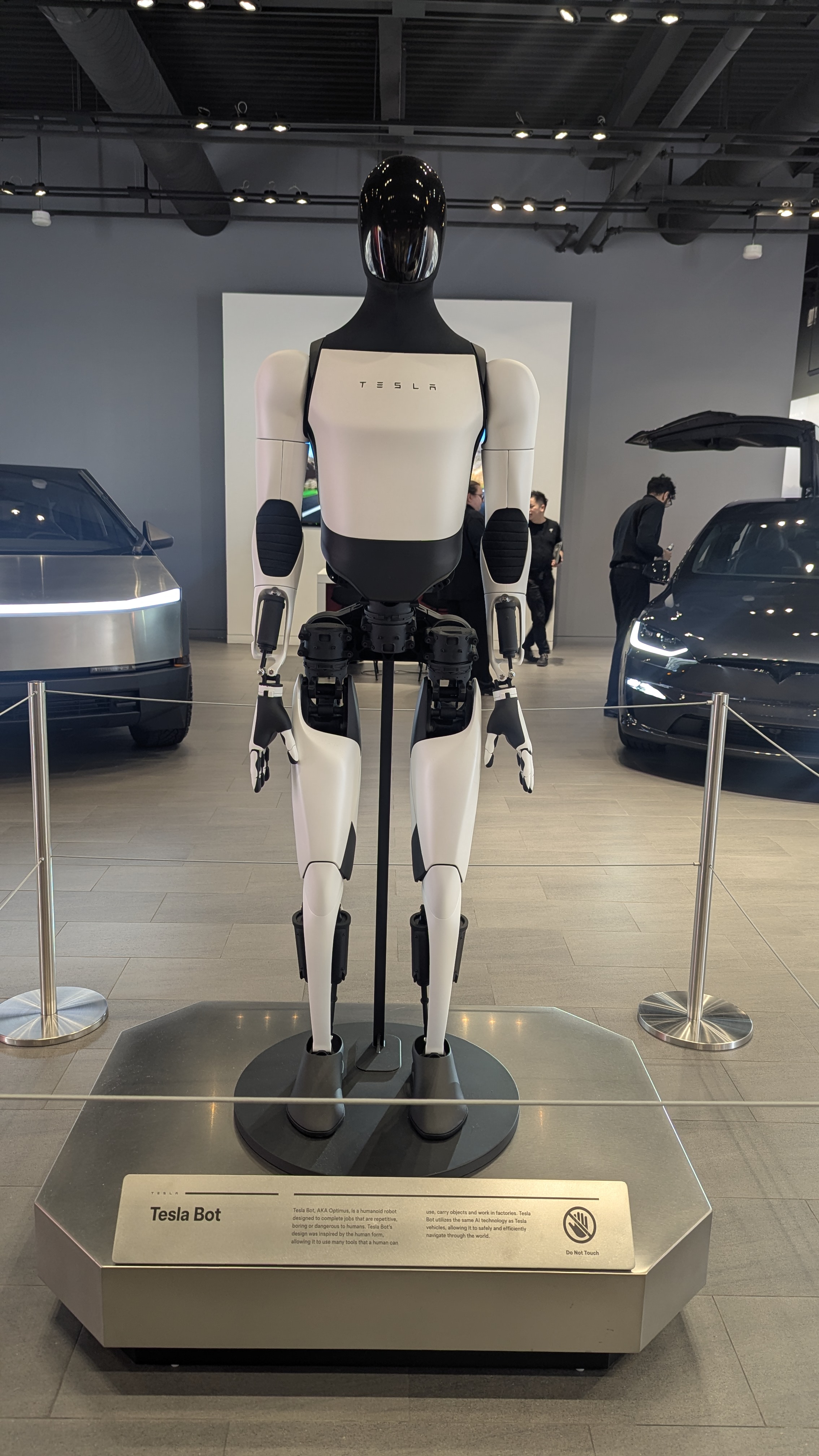
Your Parent's New Roommate Isn't Human: Robots Are Arriving in Senior Care
Forget science fiction fantasies; sophisticated humanoid robots are quietly being deployed to combat loneliness and assist with daily tasks, but they won't be replacing human caregivers anytime soon.
The direct answer
The futuristic vision of humanoid robots has landed, not in Silicon Valley labs, but in US senior care facilities and private homes. Robots like Abi
Abi, the humanoid robot that's piloting in US senior care homes, was born out of the COVID-19 pandemic. Grace Brown started developing the colorful and compact AI robot to cope with isolation during COVID-19 lockdowns while studying mechatronics engineering at the University of…
— Mike Kalil link
are actively being piloted to provide companionship, offer medication reminders, and assist with light daily tasks, demonstrating a tangible shift from hype to deployment. This move is partly driven by a desire to combat isolation, a need highlighted during the pandemic
Abi, the humanoid robot that's piloting in US senior care homes, was born out of the COVID-19 pandemic. Grace Brown started developing the colorful and compact AI robot to cope with isolation during COVID-19 lockdowns while studying mechatronics engineering at the University of…
— Mike Kalil link
, and to address significant staffing shortages in the care sector
BREAKING: Andromeda Robotics brings Abi, an emotional companion robot, to the US after 2 years in Australian care homes. • Talks, plays music, runs games, leads group sessions • Remembers residents and builds ongoing relationships • Helps offset care home staffing shortages…
— Ritwik Pavan link
. Pre-orders for such robots have surged, with nursing homes expressing interest in business-to-business contracts for larger pilot programs
2 days ago, we launched our caretaker robot for seniors. here are my observations: we got so many pre-orders that our website broke. the more interesting fact: a lot of nursing homes also reached out asking for B2B contracts. we're lining up huge pilots, and some are even…
— Audrey link
. While these machines can engage in conversations, play music, and even build relationships with residents by remembering them
BREAKING: Andromeda Robotics brings Abi, an emotional companion robot, to the US after 2 years in Australian care homes. • Talks, plays music, runs games, leads group sessions • Remembers residents and builds ongoing relationships • Helps offset care home staffing shortages…
— Ritwik Pavan link
, experts caution that they are not yet ready to handle complex caregiving duties. For instance, Japan is exploring advanced humanoid robots for difficult nursing tasks
"This includes everything from advanced humanoid robots like AIREC, which can help with difficult nursing tasks, to simpler gadgets like sleep sensors that monitor patients."
, but the current US deployment focuses on more supportive roles. Initiatives like New York's Office for the Aging testing ElliQ
"NYSOFA is working with Intuition Robotics to test the efficacy of AI companion technology for older adults, known as ElliQ."
and Korea's use of Hyodol robots for monitoring
"More than 12,000 Hyodol robots are sitting in the homes of older Koreans living alone, acting as ears on the ground, sending alerts when someone hasn't eaten or taken their medication."
show a growing trend, but the expectation for 2026 remains focused on assistance and companionship, not full-scale care.
Beyond the Sci-Fi Gimmick: Real-World Impact
The narrative surrounding humanoid robots has long been steeped in science fiction, conjuring images of dystopian futures or utopian helpers. However, the reality unfolding in senior care homes is far more grounded. Robots like Abi are not just prototypes; they are actively engaging with residents in US facilities, offering conversational companionship and performing basic tasks [c1, c3]. This deployment is a direct response to the profound loneliness experienced by many seniors, a problem exacerbated by recent global events
Abi, the humanoid robot that's piloting in US senior care homes, was born out of the COVID-19 pandemic. Grace Brown started developing the colorful and compact AI robot to cope with isolation during COVID-19 lockdowns while studying mechatronics engineering at the University of…
— Mike Kalil link
. The demand has been so significant that early launches have overwhelmed websites, with immediate interest from B2B contracts for nursing homes keen to pilot these solutions
2 days ago, we launched our caretaker robot for seniors. here are my observations: we got so many pre-orders that our website broke. the more interesting fact: a lot of nursing homes also reached out asking for B2B contracts. we're lining up huge pilots, and some are even…
— Audrey link
. This isn't about creating a robotic workforce for complex medical procedures, but rather about addressing the fundamental human need for connection and gentle support in an aging population.
Addressing the Caregiver Crisis, One Robot at a Time
The booming interest in senior-focused robots is intrinsically linked to the escalating crisis in elder care staffing. Experts point to significant shortages in qualified caregivers, a situation that threatens to leave many seniors without adequate support
BREAKING: Andromeda Robotics brings Abi, an emotional companion robot, to the US after 2 years in Australian care homes. • Talks, plays music, runs games, leads group sessions • Remembers residents and builds ongoing relationships • Helps offset care home staffing shortages…
— Ritwik Pavan link
. Humanoid robots are emerging as a potential, albeit partial, solution. In Australia, Abi has been in care homes for two years, aiding in offsetting these shortages
BREAKING: Andromeda Robotics brings Abi, an emotional companion robot, to the US after 2 years in Australian care homes. • Talks, plays music, runs games, leads group sessions • Remembers residents and builds ongoing relationships • Helps offset care home staffing shortages…
— Ritwik Pavan link
. Japan is also exploring advanced humanoid robots for demanding nursing tasks
"This includes everything from advanced humanoid robots like AIREC, which can help with difficult nursing tasks, to simpler gadgets like sleep sensors that monitor patients."
, signaling a global recognition of robotics' role in healthcare. While these machines can help with medication reminders and provide a consistent presence, they are designed to complement, not replace, human caregivers. The goal is to ease the burden on existing staff and ensure a baseline level of engagement for residents who might otherwise go without.
The Limits of Automation: What Robots Can't Do (Yet)
While the capabilities of robots like Abi are impressive—they can talk, play music, and even build ongoing relationships by remembering residents
BREAKING: Andromeda Robotics brings Abi, an emotional companion robot, to the US after 2 years in Australian care homes. • Talks, plays music, runs games, leads group sessions • Remembers residents and builds ongoing relationships • Helps offset care home staffing shortages…
— Ritwik Pavan link
—it's crucial to manage expectations. These advanced companions are not poised to take over comprehensive caregiving duties in 2026. The technology is still evolving, and the nuanced, empathetic, and physically demanding aspects of care remain firmly in the human domain. For instance, while some robots can monitor sleep patterns or send alerts if medication isn't taken
"More than 12,000 Hyodol robots are sitting in the homes of older Koreans living alone, acting as ears on the ground, sending alerts when someone hasn't eaten or taken their medication."
, they cannot provide the critical judgment, emotional support, or physical assistance required for complex medical needs. Initiatives like the ElliQ proactive care companion are focused on engagement and providing information
"NYSOFA is working with Intuition Robotics to test the efficacy of AI companion technology for older adults, known as ElliQ."
, a far cry from the hands-on care many seniors require. The industry's focus is currently on augmenting human capabilities, not replicating them entirely.
Common mistakes
- Assuming robots can handle complex care.
Current deployments focus on companionship and reminders [c1, c3, c5, c6]. Advanced medical or physical care is still beyond their scope, and expecting otherwise is unrealistic for 2026. - Overstating the 'humanoid' aspect as the primary driver.
While humanoid form is notable, the core value is AI-driven assistance and companionship, regardless of precise form. The functionality, not just the shape, is key to their deployment in care. - Ignoring the staffing crisis as a primary motivator.
The article must acknowledge that robots are being deployed to fill gaps created by severe caregiver shortages [c3], not just as a technological advancement for its own sake.
BREAKING: Andromeda Robotics brings Abi, an emotional companion robot, to the US after 2 years in Australian care homes. • Talks, plays music, runs games, leads group sessions • Remembers residents and builds ongoing relationships • Helps offset care home staffing shortages…
— Ritwik Pavan link
, and Hyodol, which acts as a watchful presence
"More than 12,000 Hyodol robots are sitting in the homes of older Koreans living alone, acting as ears on the ground, sending alerts when someone hasn't eaten or taken their medication."
, highlights a genuine need for support beyond human capacity alone. However, we must remain clear-eyed: these are tools for augmentation, not replacement. The true value lies in their ability to supplement, not supplant, the irreplaceable human touch in care.
Frequently asked
Are humanoid robots replacing human caregivers in senior homes?
No, not entirely. Current humanoid robots in senior care are primarily deployed for companionship, medication reminders, and light assistance [c1, c3]. They are intended to supplement human caregivers by reducing loneliness and easing staffing burdens, not to replace the complex, empathetic care humans provide.
What kind of tasks can these robots perform?
These robots can engage in conversations, recall personal details about residents, play music, lead simple group activities, and provide reminders for medication or appointments [c1, c3, c5]. Some systems, like Hyodol, can also monitor basic well-being and send alerts [c5].
How much do these robots cost?
Specific pricing for direct-to-consumer or facility-wide deployments isn't widely publicized, but pre-orders have seen significant interest, suggesting a substantial market demand. The cost would likely vary by manufacturer and feature set, with B2B contracts for pilot programs being negotiated [c2].
Sources


More from Technology & Aging → · Back to Perch · Browse all stories