
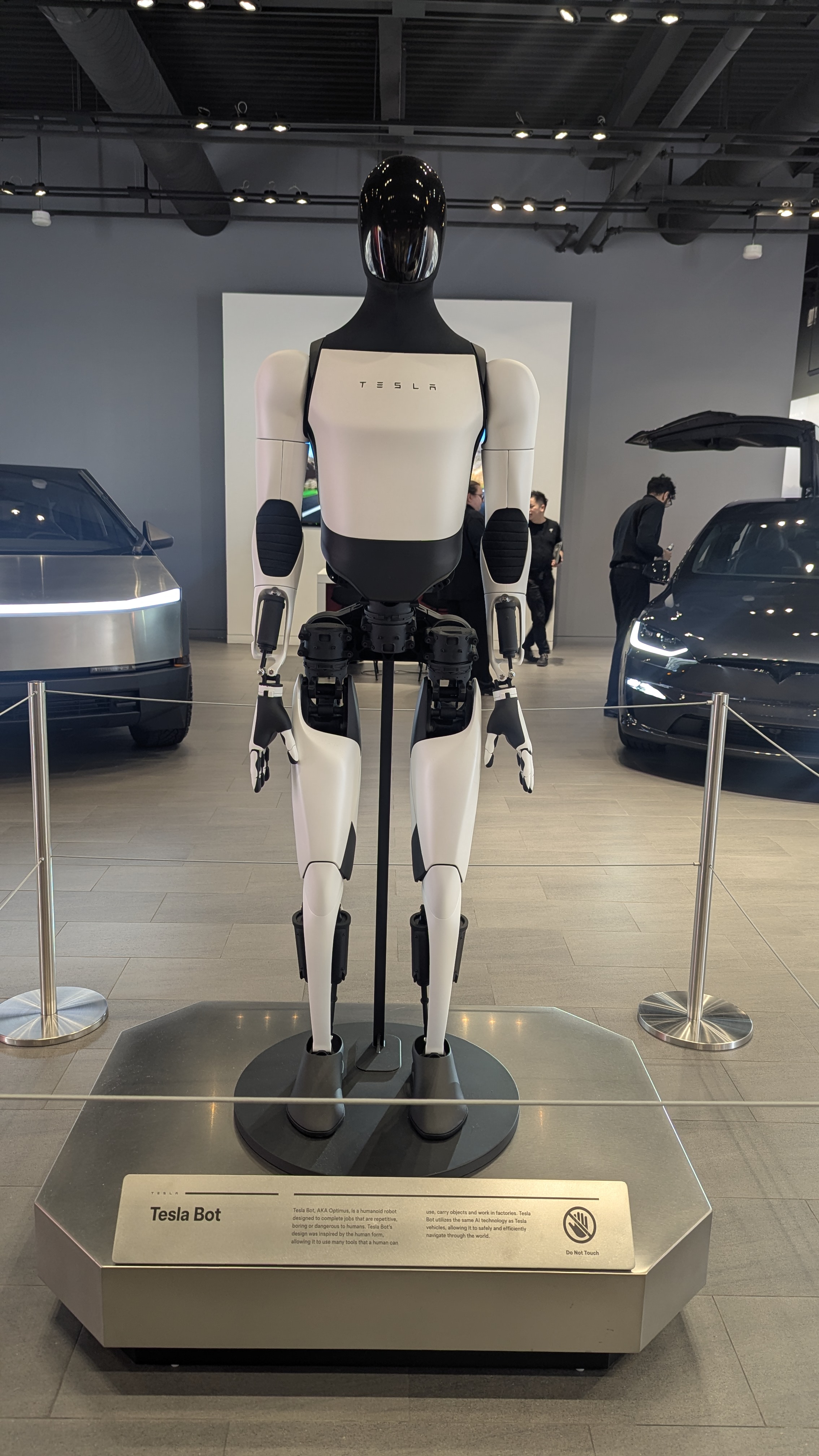
Robot Overlords Aren't Coming for Your Grandma, They're Here to Help
The fear of AI taking over distracts from a quiet revolution: humanoid robots are stepping in to fill the gaping void in elder care.
The direct answer
The pervasive fear of a robot uprising, a staple of science fiction, is obscuring a far more immediate and practical reality: humanoid robots are increasingly being deployed to address the critical global shortage of caregivers for seniors [c5, c9]. Companies like Andromeda Robotics are bringing their AI companion, Abi, to US eldercare facilities after successful trials in Australia [c1, c4]. Abi isn't designed for world domination; it's programmed to engage residents in conversation, play music, lead group sessions, and even remember individuals, building relationships to combat loneliness
BREAKING: Andromeda Robotics brings Abi, an emotional companion robot, to the US after 2 years in Australian care homes. • Talks, plays music, runs games, leads group sessions • Remembers residents and builds ongoing relationships • Helps offset care home staffing shortages…
— Ritwik Pavan link
. This technology is born from necessity, with developers like Grace Brown creating robots like Abi during the COVID-19 pandemic to combat isolation
Abi, the humanoid robot that's piloting in US senior care homes, was born out of the COVID-19 pandemic. Grace Brown started developing the colorful and compact AI robot to cope with isolation during COVID-19 lockdowns while studying mechatronics engineering at the University of…
— Mike Kalil link
. The need is dire: the US alone requires millions of additional healthcare workers by 2030, a gap that cannot be filled by human recruitment alone
"The caregiver shortage is structural, not temporary. The US alone will need 3.5 million additional healthcare workers by 2030, and unfulfilled home care jobs could hit 4.6 million by 2032, according to the Eldercare Workforce Alliance. No amount of recruitment and training can close that gap fast enough. In practice, robots don't replace skilled nursing, but they can handle routine tasks that currently eat a caregiver's time: medication reminders, fall detection, check-in conversations."
. Robots like Abi can handle routine tasks, offer reminders, and detect falls, freeing up human staff for more complex care
"The caregiver shortage is structural, not temporary. The US alone will need 3.5 million additional healthcare workers by 2030, and unfulfilled home care jobs could hit 4.6 million by 2032, according to the Eldercare Workforce Alliance. No amount of recruitment and training can close that gap fast enough. In practice, robots don't replace skilled nursing, but they can handle routine tasks that currently eat a caregiver's time: medication reminders, fall detection, check-in conversations."
. China, meanwhile, is aggressively developing humanoid robots, with over 400 models now in existence, specifically targeting the smart elderly care sector, indicating a global push for robotic solutions in this area [c7, c8].
The Unseen Workforce: Robots in Action
The image of a caregiver is often one of human touch and empathy, yet the reality is a workforce stretched perilously thin. The US alone faces a deficit of 4.6 million home care jobs by 2032, a number so staggering that recruitment and training alone cannot bridge the gap
"The caregiver shortage is structural, not temporary. The US alone will need 3.5 million additional healthcare workers by 2030, and unfulfilled home care jobs could hit 4.6 million by 2032, according to the Eldercare Workforce Alliance. No amount of recruitment and training can close that gap fast enough. In practice, robots don't replace skilled nursing, but they can handle routine tasks that currently eat a caregiver's time: medication reminders, fall detection, check-in conversations."
. This is where robots like Abi are making their mark. Developed in response to pandemic-induced isolation
Abi, the humanoid robot that's piloting in US senior care homes, was born out of the COVID-19 pandemic. Grace Brown started developing the colorful and compact AI robot to cope with isolation during COVID-19 lockdowns while studying mechatronics engineering at the University of…
— Mike Kalil link
, Abi is more than just a machine; it's an interactive companion. It engages residents with conversation, music, and games, and its ability to remember individuals fosters ongoing relationships, a crucial element in combating elderly loneliness
BREAKING: Andromeda Robotics brings Abi, an emotional companion robot, to the US after 2 years in Australian care homes. • Talks, plays music, runs games, leads group sessions • Remembers residents and builds ongoing relationships • Helps offset care home staffing shortages…
— Ritwik Pavan link
. This isn't about replacing human connection entirely, but about augmenting it and ensuring basic needs and social interaction are met when human resources are insufficient.
A Global Pivot to Robotic Care
The trend towards integrating robots into elderly care isn't confined to a single region. China, for instance, has rapidly become a leader in humanoid robot development, boasting over 400 models, with a significant portion specifically aimed at the smart elderly care sector
"China's Ministry of Industry and Information Technology (MIIT) reported that the country now has over 400 humanoid robot models, accounting for more than half of the global total, as the smart elderly care sector accelerates."
. This surge is driven by a national strategy to enhance the quality of life for seniors, ease the burden on families, and address severe labor shortages in care facilities
"The Ministry of Industry and Information Technology, in collaboration with the Ministry of Civil Affairs, issued a notice on Monday inviting organisations to participate in pilot projects. The initiative aims to enhance the integration of robotics into smart elderly care. The programme “primarily focuses on improving the quality of life for senior citizens, reducing the caregiving burden on families, addressing labour shortages in communities and institutional care, and enhancing the overall elderly care infrastructure”."
. This global momentum underscores a pragmatic recognition: robots can effectively assist and, in some cases, replace manual caregiving for daily needs, alleviating societal and familial pressures and helping to close the critical nursing staff gap
"The field of elderly care has witnessed the emergence of elderly-care robots, which can effectively assist and replace manual caregiving in meeting the daily life needs of elderly individuals. These robots have the potential to alleviate the burden on families and society in providing elderly care, as well as address the critical shortage of nursing staff (Vercelli et al., 2018)."
. The scale of this development suggests a coordinated, international effort to leverage robotics for an aging world.
Beyond Sci-Fi: The Practical Role of Companion Robots
The 'robot overlord' trope is a red herring. The actual deployment of robots in elder care focuses on practical, everyday assistance. Robots are being utilized for tasks like medication reminders, fall detection, and simple check-in conversations – tasks that consume valuable caregiver time but don't require advanced medical expertise
"The caregiver shortage is structural, not temporary. The US alone will need 3.5 million additional healthcare workers by 2030, and unfulfilled home care jobs could hit 4.6 million by 2032, according to the Eldercare Workforce Alliance. No amount of recruitment and training can close that gap fast enough. In practice, robots don't replace skilled nursing, but they can handle routine tasks that currently eat a caregiver's time: medication reminders, fall detection, check-in conversations."
. This frees up human professionals to focus on complex care needs. Furthermore, the emotional support aspect is increasingly prominent. Robots are being designed to talk, play music, and run games, directly addressing the pervasive issue of loneliness among the elderly
BREAKING: Andromeda Robotics brings Abi, an emotional companion robot, to the US after 2 years in Australian care homes. • Talks, plays music, runs games, leads group sessions • Remembers residents and builds ongoing relationships • Helps offset care home staffing shortages…
— Ritwik Pavan link
. One startup even reported overwhelming pre-orders and inquiries from nursing homes for their caretaker robot, indicating a strong market demand for these practical solutions
2 days ago, we launched our caretaker robot for seniors. here are my observations: we got so many pre-orders that our website broke. the more interesting fact: a lot of nursing homes also reached out asking for B2B contracts. we're lining up huge pilots, and some are even…
— Audrey link
.
Common mistakes
- Focusing solely on the fear of AI taking over jobs.
This sensational narrative distracts from the urgent, practical need for AI in elder care to address critical staffing shortages and improve quality of life for seniors. - Presenting robots as a complete replacement for human caregivers.
Robots are best understood as augmentation tools, handling routine tasks and providing companionship to supplement, not supplant, essential human interaction and complex medical care. - Ignoring the global scale of the caregiver shortage and robotic solutions.
The issue is not isolated; countries like China are making significant investments in robotics for elder care, indicating a widespread, international response to demographic shifts.
"The growing global elderly population presents significant challenges in providing care for older adults. AI-driven robots offer promising solutions to these challenges by enhancing social interaction, assisting in daily activities, and providing personalized care. ... The integration of robots in caregiving can alleviate caregiver burden, improve emotional support, and increase independence for the elderly."
. While sensational headlines focus on hypothetical AI threats, real-world robots are quietly stepping into roles that human caregivers, due to sheer numbers and burnout, cannot sustainably fill [c5, c9]. These aren't killer machines; they are companions designed to offer conversation, reminders, and basic assistance, thereby enhancing the quality of life for seniors and reducing the immense pressure on human caregivers
"The Ministry of Industry and Information Technology, in collaboration with the Ministry of Civil Affairs, issued a notice on Monday inviting organisations to participate in pilot projects. The initiative aims to enhance the integration of robotics into smart elderly care. The programme “primarily focuses on improving the quality of life for senior citizens, reducing the caregiving burden on families, addressing labour shortages in communities and institutional care, and enhancing the overall elderly care infrastructure”."
. It's time to shift the conversation from dystopian fears to practical solutions, recognizing these robots as vital tools in ensuring dignified care for our aging population.
Frequently asked
Are these robots going to take over my parent's care completely?
No, the current focus is on augmenting human care. Robots like Abi handle tasks such as reminders, basic conversation, and fall detection, freeing up human caregivers for more complex needs and social interaction. They are designed to assist, not replace, human connection.
How do these robots help with loneliness?
These robots are programmed for social interaction. They can engage in conversations, play music, lead group activities, and remember personal details about residents, providing a consistent and comforting presence that helps alleviate isolation.
What is the biggest challenge these robots are addressing?
The primary challenge is the severe global shortage of human caregivers for the elderly. Robots help fill this gap by performing routine tasks and offering companionship, which is crucial as the elderly population continues to grow.
Sources
- Mike Kalil (Tier 1, type=x_post)
- Mike Kalil (Tier 1, type=x_post)
- Audrey (Tier 1, type=x_post)
- Ritwik Pavan (Tier 1, type=x_post)
- There's A Robot For That (Tier 1, type=news)
- Faculty of Science and Technology Kampala International University Uganda (Tier 2, type=news)
- China's Ministry of Industry and Information Technology (MIIT) (Tier 2, type=news)
- Ministry of Industry and Information Technology (MIIT) and Ministry of Civil Affairs (Tier 2, type=news)
- PMC (Tier 2, type=news)



More from Technology & Aging → · Back to Perch · Browse all stories