
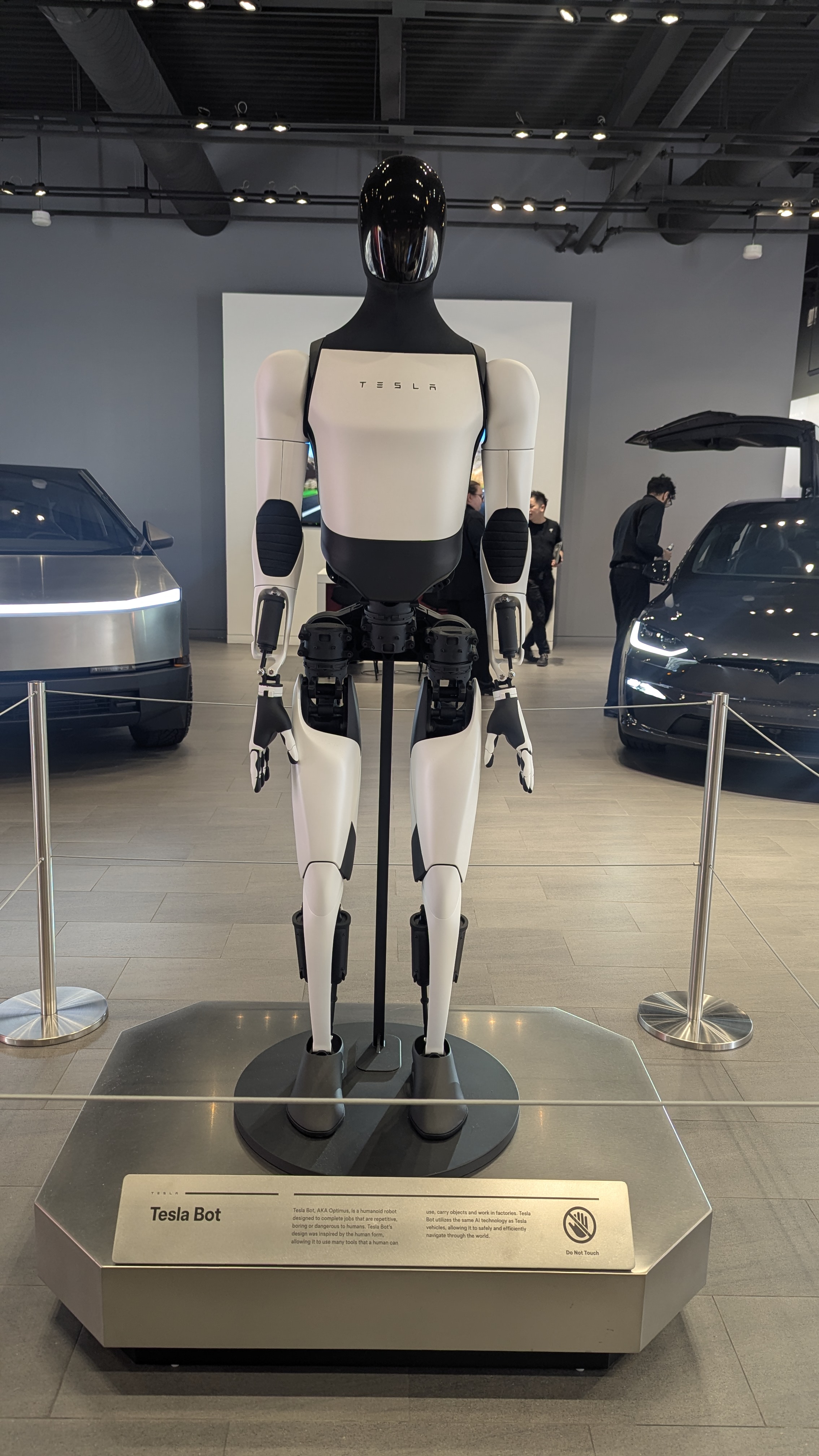
Robots Aren't Just Coming for Your Job, They're Coming for Your Care
Forget the science fiction nightmares; the real revolution in elder care is already here, and it's surprisingly practical.
The direct answer
The conventional narrative paints robots as job-stealing automatons, a vision of the future that often feels distant and abstract. However, a quiet revolution is already underway in senior care facilities, where humanoid robots are being deployed not for factory floors, but for companionship and assistance. Andromeda Robotics' Abi, for instance, is already in Australian care homes and now entering the US, capable of talking, playing music, and even remembering residents' names
BREAKING: Andromeda Robotics brings Abi, an emotional companion robot, to the US after 2 years in Australian care homes. • Talks, plays music, runs games, leads group sessions • Remembers residents and builds ongoing relationships • Helps offset care home staffing shortages…
— Ritwik Pavan link
. This isn't just about novelty; these robots are addressing a critical shortage of human caregivers, a problem exacerbated by factors like the COVID-19 pandemic, which spurred development like that of the robot Grace Brown
Abi, the humanoid robot that's piloting in US senior care homes, was born out of the COVID-19 pandemic. Grace Brown started developing the colorful and compact AI robot to cope with isolation during COVID-19 lockdowns while studying mechatronics engineering at the University of…
— Mike Kalil link
. The market for humanoid robots is projected to explode, from $5.41 billion in 2026 to $50.27 billion by 2035, with a staggering 28.1% annual growth rate
GOOD NEWS 🤖 According to exclusive report by MarketsandMarkets™, the humanoid robot market is projected to skyrocket from $5.41 billion in 2026 to $50.27 billion by 2035—compounding at a massive 28.1% annually 📈 With Optimus in mass production by the end of this year, Tesla…
— Ming link
. This surge is driven by practical needs, with pre-orders for caretaker robots overwhelming websites and nursing homes actively seeking business-to-business contracts for pilot programs
2 days ago, we launched our caretaker robot for seniors. here are my observations: we got so many pre-orders that our website broke. the more interesting fact: a lot of nursing homes also reached out asking for B2B contracts. we're lining up huge pilots, and some are even…
— Audrey link
. The focus is shifting from hypothetical AI threats to tangible solutions for an aging population.
The Practicality of Companionship
Forget the Terminator. The most pressing application of advanced robotics isn't warfare, but the quiet corridors of nursing homes. Robots like Abi are designed for emotional support and daily engagement, a stark contrast to the industrial robots of yesteryear. They can converse, play music, and even recall personal details about residents, fostering a sense of ongoing relationship
BREAKING: Andromeda Robotics brings Abi, an emotional companion robot, to the US after 2 years in Australian care homes. • Talks, plays music, runs games, leads group sessions • Remembers residents and builds ongoing relationships • Helps offset care home staffing shortages…
— Ritwik Pavan link
. This focus on emotional intelligence and memory is a direct response to the isolation experienced by many seniors, a need amplified during recent global health crises
Abi, the humanoid robot that's piloting in US senior care homes, was born out of the COVID-19 pandemic. Grace Brown started developing the colorful and compact AI robot to cope with isolation during COVID-19 lockdowns while studying mechatronics engineering at the University of…
— Mike Kalil link
. The development of these companion bots is less about replacing human interaction and more about supplementing it, providing a consistent presence when human staff are stretched thin.
A Market Poised for Hypergrowth
The financial projections for the humanoid robot market are nothing short of explosive. Analysts predict a leap from $5.41 billion in 2026 to $50.27 billion by 2035, driven by a compound annual growth rate of 28.1%
GOOD NEWS 🤖 According to exclusive report by MarketsandMarkets™, the humanoid robot market is projected to skyrocket from $5.41 billion in 2026 to $50.27 billion by 2035—compounding at a massive 28.1% annually 📈 With Optimus in mass production by the end of this year, Tesla…
— Ming link
. This isn't speculative fantasy; it's a response to tangible demand. Companies launching caretaker robots are experiencing website crashes due to overwhelming pre-orders, and a significant portion of interest is coming from nursing homes seeking B2B contracts for large-scale pilots
2 days ago, we launched our caretaker robot for seniors. here are my observations: we got so many pre-orders that our website broke. the more interesting fact: a lot of nursing homes also reached out asking for B2B contracts. we're lining up huge pilots, and some are even…
— Audrey link
. This indicates a clear industry shift towards adopting these technologies to manage operational challenges, particularly staffing shortages.
Bridging the Caregiver Gap
The push for robotic assistance in senior care is fundamentally driven by a widening chasm in the human caregiver workforce. The COVID-19 pandemic, for instance, directly spurred the development of robots like Grace Brown's creation to combat isolation and support strained healthcare systems
Abi, the humanoid robot that's piloting in US senior care homes, was born out of the COVID-19 pandemic. Grace Brown started developing the colorful and compact AI robot to cope with isolation during COVID-19 lockdowns while studying mechatronics engineering at the University of…
— Mike Kalil link
. Andromeda Robotics' Abi, after two years of successful deployment in Australian care homes, is now being brought to the US to help offset these very shortages
BREAKING: Andromeda Robotics brings Abi, an emotional companion robot, to the US after 2 years in Australian care homes. • Talks, plays music, runs games, leads group sessions • Remembers residents and builds ongoing relationships • Helps offset care home staffing shortages…
— Ritwik Pavan link
. This isn't about cutting corners; it's about ensuring that seniors receive a baseline level of engagement and support, even as the availability of human caregivers remains a persistent challenge. The industry sees this as a vital tool for maintaining operational viability.
Common mistakes
- Focusing solely on the 'job replacement' angle of AI.
This misses the more immediate and practical application of robotics in areas like elder care, which is driven by necessity and a desire to improve quality of life, not just automate tasks. - Presenting robots as a complete substitute for human interaction.
The current wave of robots in elder care are positioned as supplements and aids, designed to fill gaps and enhance the capabilities of human caregivers, rather than replace them entirely. - Ignoring the economic drivers behind robotic adoption in care settings.
The significant market growth projections [c1] and the proactive outreach from nursing homes [c3] highlight that this adoption is heavily influenced by operational and financial pressures, such as staffing shortages.
BREAKING: Andromeda Robotics brings Abi, an emotional companion robot, to the US after 2 years in Australian care homes. • Talks, plays music, runs games, leads group sessions • Remembers residents and builds ongoing relationships • Helps offset care home staffing shortages…
— Ritwik Pavan link
and Grace Brown
Abi, the humanoid robot that's piloting in US senior care homes, was born out of the COVID-19 pandemic. Grace Brown started developing the colorful and compact AI robot to cope with isolation during COVID-19 lockdowns while studying mechatronics engineering at the University of…
— Mike Kalil link
highlights a direct response to isolation and critical staffing gaps, a trend that the market is clearly backing with substantial growth projections
GOOD NEWS 🤖 According to exclusive report by MarketsandMarkets™, the humanoid robot market is projected to skyrocket from $5.41 billion in 2026 to $50.27 billion by 2035—compounding at a massive 28.1% annually 📈 With Optimus in mass production by the end of this year, Tesla…
— Ming link
. The fact that nursing homes are actively pursuing these technologies for pilot programs underscores their immediate utility, not as replacements for human connection, but as crucial supplements
2 days ago, we launched our caretaker robot for seniors. here are my observations: we got so many pre-orders that our website broke. the more interesting fact: a lot of nursing homes also reached out asking for B2B contracts. we're lining up huge pilots, and some are even…
— Audrey link
. This isn't the stuff of dystopian futures; it's the practical application of technology to solve pressing societal challenges.
Frequently asked
Are these robots going to replace human caregivers?
Not entirely, and not in the immediate future. Robots like Abi are designed to supplement human care by providing companionship, reminders, and basic engagement, thereby alleviating some of the pressure on human staff. They address specific needs like combating isolation and managing routine tasks, allowing human caregivers to focus on more complex and personalized care.
How much do these companion robots cost?
Specific pricing for individual units isn't widely publicized, as many deployments are through B2B contracts with care facilities. However, the projected market growth from $5.41 billion in 2026 to $50.27 billion by 2035 [c1] suggests significant investment and varying price points, from individual purchase to large-scale facility leases.
What kind of tasks can these robots perform?
Current companion robots can engage in conversation, play music, run simple games, lead group sessions, and remember personal details about residents [c4]. They can also serve as reminders for medication or hydration. Their capabilities are focused on social engagement and basic task management to support well-being and reduce loneliness.
Sources


More from Technology & Society → · Back to Perch · Browse all stories