
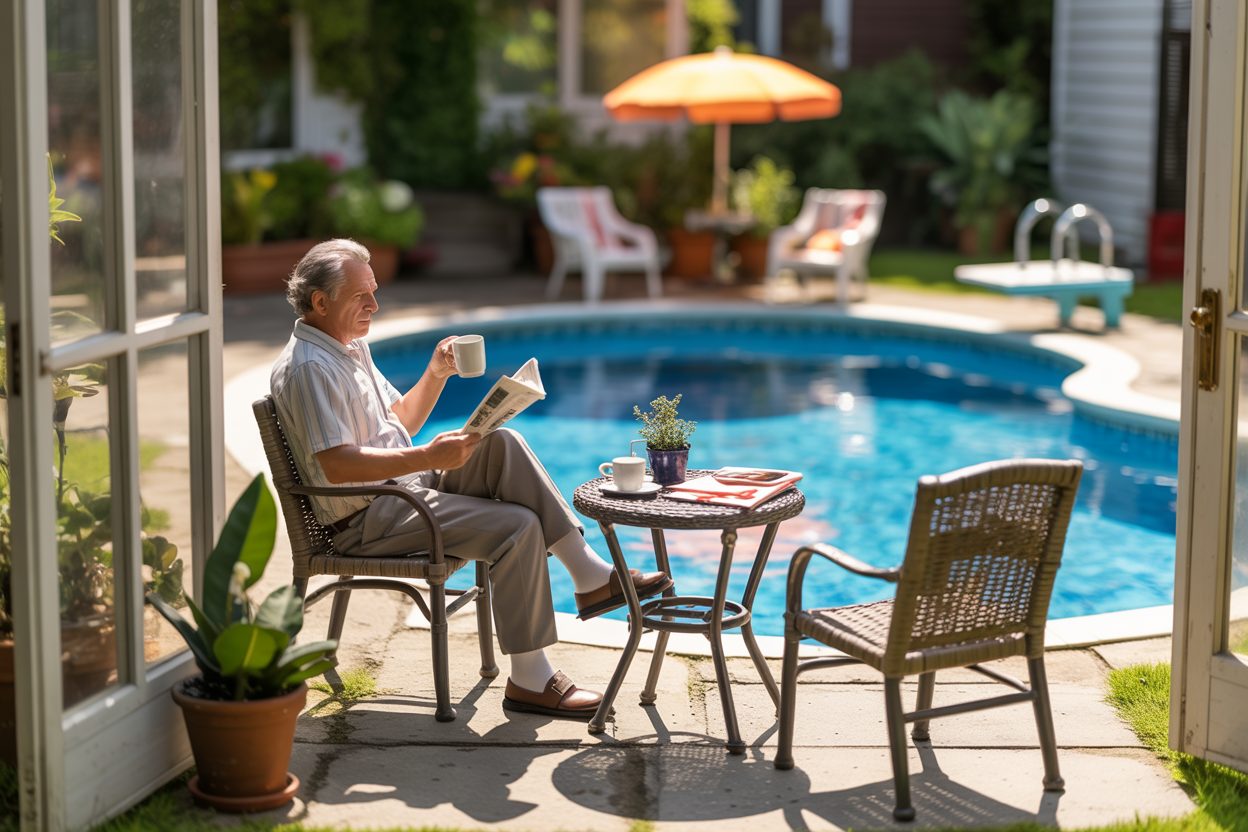
When the Stairlift Isn't Enough: Rethinking Home for Aging Parents
You've installed ramps and grab bars, but your parent's home might be fighting against them.
The scent of lavender and old paper is a familiar comfort, but the silence that follows a loud thud is not. You've spent months, maybe years, transforming a beloved home into a fortress against falls and mishaps. Yet, the worry persists, a low hum beneath the surface of daily life. The truth is, no amount of grab bars can fully outmaneuver a body that's changing faster than the architecture can keep up.
The direct answer
When home modifications, even extensive ones like stairlifts or widened doorways, fail to address the root causes of safety concerns like mobility decline, cognitive changes, or increasing frailty, it's time to explore alternatives. This often happens when daily tasks become unmanageable, or when falls become more frequent and severe, despite your best efforts to adapt the living space.
The Limits of the Ramp
You've probably consulted with a Certified Aging-in-Place Specialist (CAPS), or at least looked into their recommendations. These are professionals who can assess a home and suggest modifications like ramps, stairlifts, widened doorways, and improved lighting. A CAPS assessment might cost between $200 and $600, depending on your location and the complexity of the home. These modifications can be substantial investments, with stairlifts alone often running $1,500 to $3,500 installed, and bathroom remodels easily exceeding $10,000.
These changes are invaluable for addressing immediate physical barriers. They can make a significant difference in preventing falls due to uneven flooring or difficulty with stairs. Think of it as making the house itself more accommodating to a changing body. It’s about creating a safer physical environment within the familiar walls.
However, even the most expertly designed home can't compensate for profound mobility loss or cognitive impairment. If your parent is struggling to get out of a chair without assistance, or if confusion leads to forgetting to turn off the stove, the problem extends beyond the physical structure of the house. The home is no longer enough to guarantee their safety and well-being.
Consider the scenario where someone needs help with personal care tasks like bathing or dressing. While a walk-in shower helps with accessibility, it doesn't provide the hands-on assistance required. Similarly, smart home technology, like voice-activated lights or fall detection sensors, can be helpful but are often supplementary tools, not replacements for direct supervision or care.
Beyond the Bricks and Mortar
When home modifications are no longer sufficient, the conversation shifts from adapting the environment to adapting the level of support. This is where understanding different types of care facilities becomes crucial. It’s not a failure of your efforts; it's a recognition of evolving needs.
A nursing home, for instance, provides 24/7 skilled nursing care, meaning there are licensed nurses on staff to manage complex medical needs, administer medications, and provide personal assistance. This is often the next step for individuals with significant health issues that require constant oversight. The cost can range from $6,000 to $10,000 per month, a stark contrast to the $0 to $500 monthly cost for some home modifications.
Memory care is a specialized type of setting designed for individuals with Alzheimer's disease or other forms of dementia. These facilities offer a secure environment with staff trained to manage behavioral changes and provide activities tailored to cognitive stimulation. The cost is typically higher than assisted living, often between $5,000 and $8,000 per month, reflecting the specialized staffing and programming.
Assisted living communities offer a middle ground, providing help with daily activities like meals, medication management, and bathing, while allowing for more independence than a nursing home. Residents usually have their own apartments or rooms. Costs generally fall between $3,000 and $6,000 per month. This can be a good option when someone needs more support than can be safely provided at home but doesn't require constant medical intervention.
The Role of Technology and Support Staff
Smart home technology can extend a sense of independence, but it has its limits. Devices like smart speakers can control lights or thermostats, and wearable fall detectors can alert emergency services. Some systems can even monitor activity patterns to detect anomalies. The initial setup can range from a few hundred dollars for basic smart plugs to several thousand for integrated systems.
However, these tools are most effective when the user can operate them, understand the alerts, and respond appropriately, or when there's a human backup. A fall detection alert is only useful if someone can respond to it. If a person is experiencing significant cognitive decline, they may not be able to interact with the technology or understand its purpose.
This is where professional caregivers come in. In-home caregivers can provide a range of services, from a few hours a week for companionship and light housekeeping to 24/7 support. The cost can vary widely, from $20 to $40 per hour, making round-the-clock care potentially more expensive than assisted living or memory care over the long term. However, it allows the person to remain in their own home, which can be a significant emotional benefit.
When deciding between home care and a care facility, consider the level of supervision required. If falls are frequent, wandering is a concern, or complex medical needs arise, a facility with built-in safety features and trained staff is often the more prudent choice. It's about matching the environment to the individual's actual capabilities and risks, not just their desire to stay home.
Common mistakes
- Delaying the conversation about moving.
The longer you wait, the more urgent and stressful the decision becomes. It can lead to a crisis move, which is often more expensive and less ideal than a planned transition. Starting the conversation early allows for more options and less pressure. - Ignoring red flags because you don't want to upset your parent.
While it's natural to want to protect your parent's feelings, their safety is paramount. Subtle changes in their ability to manage daily tasks or increasing instances of near-falls are not things to overlook. Addressing these concerns directly, with empathy, is crucial for their well-being.
Frequently asked
How do I know if my parent needs more than home modifications?
Look for consistent patterns of difficulty with daily activities like bathing, dressing, or preparing meals, even with modifications. Frequent falls or near-falls, increased confusion, medication errors, or significant weight loss are also strong indicators that home modifications are no longer sufficient and a higher level of support is needed.
Can I trust online reviews of care facilities?
Online reviews can be a starting point, but they should be taken with a grain of salt. Paid referral platforms like A Place for Mom or Caring.com may prioritize facilities that pay them commissions, potentially omitting those that don't. It's essential to visit facilities in person, speak with staff and residents, and check federal CMS and state inspection data for objective quality information.
What are the costs associated with different care options?
Costs vary widely. Home modifications can range from a few hundred dollars for simple safety devices to tens of thousands for major renovations. In-home care typically costs $20-$40 per hour. Assisted living averages $3,000-$6,000 per month, memory care $5,000-$8,000 per month, and nursing homes $6,000-$10,000 per month. These figures are approximate and depend heavily on geographic location and the level of care required.
Sources
- National Association of Home Builders (NAHB) - Certified Aging-in-Place Specialist (CAPS) program overview and benefits.
- Medicare.gov Care Compare - Tool to find and compare nursing homes, assisted living facilities, and other types of care facilities based on federal CMS data and state inspection reports.
- Administration for Community Living (ACL) - Information and resources on long-term care options, including costs and types of services.
More from Home & Safety → · Back to Perch · Browse all stories