
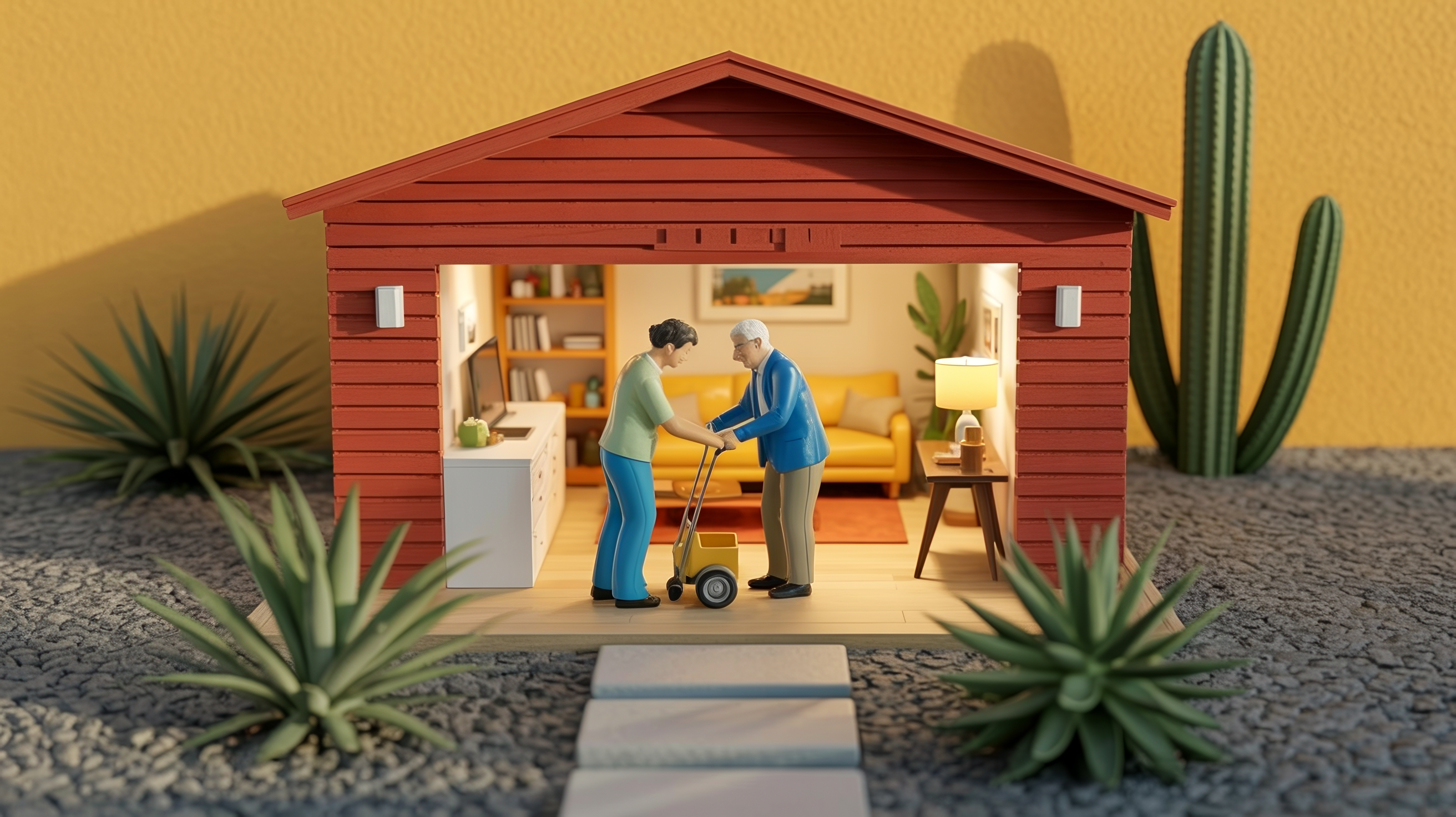
The Ozempic Fallacy: Why Trading Fat for Muscle Is a Dangerous Bargain for Aging Parents
GLP-1 drugs are remarkable weight-loss tools, but in an older body, they can quietly dismantle the physical strength keeping your parent out of a nursing home.
If you want to see what a quiet emergency looks like, watch an eighty-year-old try to get out of a deep armchair. It isn't a matter of willpower; it is a matter of pure, mechanical torque. Now, imagine stripping away forty percent of the muscle fibers that make that movement possible, all under the guise of improving their health. That is exactly what happens when older adults take GLP-1 drugs like Ozempic without a deliberate plan to preserve their strength.
The direct answer
While GLP-1 drugs effectively lower blood sugar and reduce cardiovascular risk, they do not differentiate between fat and skeletal muscle during rapid weight loss. In adults over sixty-five, up to forty percent of the weight lost on these medications can be lean muscle mass. This rapid muscle wasting, known as accelerated sarcopenia, directly degrades balance, reduces reaction time during a slip, and drastically increases the risk of a fall that could end their independence.
The Bio-Mechanics of the Trade-Off
When a younger person loses weight on semaglutide, they lose some muscle, but their body easily rebuilds it with exercise and protein. For a seventy-year-old, that muscle is gone for good. Aging muscles already suffer from natural atrophy, but GLP-1 drugs accelerate this process by suppressing appetite so deeply that older adults fail to eat enough protein to maintain their existing frame.
This isn't just about looking frail; it is about the loss of fast-twitch muscle fibers. These are the emergency fibers your body fires to correct your balance when you trip over the edge of a rug. Without them, a stumble doesn't end with an awkward step—it ends on the hardwood floor.
An older body needs muscle far more than it needs to hit an arbitrary goal weight on a scale. Muscle is the metabolic engine that processes blood sugar, the armor that protects bones during a fall, and the physical force that keeps your parent moving. Trading that active, protective tissue just to see a lower number on the bathroom scale is a bad bargain.
The Hidden Danger in the Hallway
Most homes are designed for able-bodied adults, but we tolerate their hazards because our parents have spent decades adapting to them. They know exactly how to step over that high tub wall or climb the dim stairs to the basement. But when muscle mass drops by ten or fifteen percent in a matter of months, those familiar environments turn hostile.
A weaker quad muscle means your father can no longer control his descent onto the toilet, leading to a hard drop that can damage hips or cause a miss. Weakened calf and ankle muscles mean his feet drag slightly more when he is tired, making low-pile area rugs and door saddles active trip hazards. The environment didn't change; his physical margin for error did.
If your parent is on a GLP-1, you cannot wait for a fall to tell you their home is no longer safe. You need to actively audit their living space with their new, weaker physical reality in mind. Simple adjustments like replacing round doorknobs with lever handles and adding high-contrast tape to stair edges can prevent the split-second balance failures that lead to emergency room visits.
The True Cost of Prevention vs. Reaction
The math of aging in place is brutal but simple. A single fall resulting in a broken hip costs an average of forty thousand dollars in immediate hospital bills, followed by months of rehab that insurance rarely fully covers. Worse, half of older adults who suffer a hip fracture never regain their previous level of independence, and many pass away within a year.
Compare that to the proactive steps you can take today. A professional aging-in-place assessment costs a fraction of a single day in a nursing home. Palmelle offers an Assessment with a Certified Aging-in-Place Specialist (CAPS) for $399, which identifies exact structural hazards in your parent's home and provides a clear plan to fix them.
If you prefer to find local contractors to handle physical modifications like grab bars or walk-in showers, you can learn more about vetted options at /home-services. Investing in home modifications is not an admission of defeat; it is a strategic defense of your parent's autonomy while their body adapts to medication.
Common mistakes
- Assuming weight loss always equals better health
Families often celebrate a parent's weight loss on Ozempic without checking if they can still carry groceries or stand up from a chair. Watch their physical function, not just the scale, and push for a high-protein diet paired with resistance exercises. - Waiting for a fall to install safety equipment
Adding grab bars after a hip fracture is like buying a seatbelt after a car crash. Be proactive by scheduling a $399 CAPS aging-in-place assessment to identify hidden hazards before they cause an injury.
Frequently asked
Can my parent prevent muscle loss while taking Ozempic?
Yes, but it requires deliberate effort. They must consume at least 1.2 grams of protein per kilogram of body weight daily and engage in strength training at least twice a week. If they cannot or will not do this, the risk of severe muscle wasting and subsequent falls remains incredibly high.
What is a CAPS assessment and why does my parent need one?
A Certified Aging-in-Place Specialist (CAPS) is trained to identify environmental hazards that standard home inspectors miss, such as poor lighting, improper toilet heights, and unsafe flooring transitions. Palmelle offers this in-home assessment for $399 to help you modify the home before a weakness-induced fall occurs.
Are home modifications covered by Medicare?
Traditional Medicare rarely
More from Home & Safety → · Back to Perch · Browse all stories