
The Hospital-at-Home Illusion: Why the Newest Trend in Medicine Is a Massive Unpaid Labor Tax on You
Hospital systems get paid full inpatient rates while you handle the bedsores, the IV drips, and the 2 a.m. alarms.
The IV pole is wedged between your mother's favorite armchair and a pile of unopened mail. Every forty-five minutes, a pump beeps with the shrill insistence of a smoke detector with a low battery, signaling that the saline bag is empty. You are not a nurse, but you have spent the last six hours calculating dosage schedules and cleaning a plastic port on her arm. This is hospital-at-home, the darling of modern hospital administrators who realized they could clear out physical beds and still bill insurance companies at full inpatient rates. The hospital gets the payout, while you get an unpaid, highly stressful second job as an amateur night-shift nurse.
The direct answer
The hospital-at-home model shifts the physical, emotional, and logistical labor of acute recovery from paid professionals to untrained family members. While hospital systems reduce their overhead and keep billing full inpatient insurance rates, adult children shoulder an average of 40 hours of unpaid labor per week. This is not basic caregiving; it is complex task management, including administering intravenous drugs, managing high-tech monitoring equipment, and recognizing subtle physiological warning signs. To make this work without destroying your own sanity, you must demand a formal assessment of the home environment, establish strict boundaries on what tasks you will perform, and hire independent support rather than relying solely on virtual doctor check-ins.
The Economics of the Virtual Ward
Let us look at the math, because the hospital systems certainly did. Under federal waivers, hospitals can admit a person to a virtual ward and receive the exact same reimbursement rate from Medicare as they would if that person were lying in a physical room on the fourth floor. But in the physical hospital, that room fee covers a team of nurses, a janitorial staff, a commercial kitchen, and round-the-clock physical monitoring.
In your parent's living room, those services are replaced by a tablet, a Bluetooth blood pressure cuff, and you. The hospital saves thousands of dollars per day on facility maintenance, food service, and night-shift nursing staff. Meanwhile, you absorb the cost of increased utility bills, extra laundry, and the massive financial hit of taking time off from your actual career to watch an oxygen monitor.
This is not a benevolent shift toward comfort; it is a brilliant logistical pivot. By redefining the home as a care space, hospital networks have successfully outsourced their most labor-intensive operations to an unpaid workforce of adult children who are too tired and too guilty to say no.
The Myth of "Continuous Virtual Support"
The glossy brochures promise that a team of doctors is just a click away on a dedicated iPad. What they do not mention is that a video screen cannot change a soiled sheet or hold a cup of water to a trembling lip. When the monitor sounds an alarm at 3:00 a.m. because the oxygen sensor slipped off your father’s finger, it is you who must jump out of bed to fix it, not the virtual nurse sitting in a call center three states away.
The actual physical care in these programs is often limited to one or two brief visits a day from a traveling nurse who stays just long enough to check vitals and change a dressing. The remaining twenty-two hours of the day are your responsibility. If your parent becomes disoriented, falls, or refuses to take their pills, the burden of managing that crisis falls entirely on your shoulders.
This setup creates a dangerous illusion of safety. You are asked to perform tasks that usually require a nursing degree, with nothing more than a fifteen-minute tutorial and a laminated cheat sheet to guide you. When things go wrong, the default instruction is often simply to call 911—which defeats the entire purpose of avoiding the emergency department in the first place.
Reclaiming Control and Safe Aging at Home
If you want your parent to stay out of a care facility or a nursing home long-term, you have to build a system that does not rely on your personal exhaustion. True safety at home requires physical modifications and professional eyes, not just high-tech gadgets and virtual check-ins. It starts with an objective look at the physical environment through a Certified Aging-in-Place Specialist (CAPS) assessment, which identifies actual structural hazards before they cause a crisis.
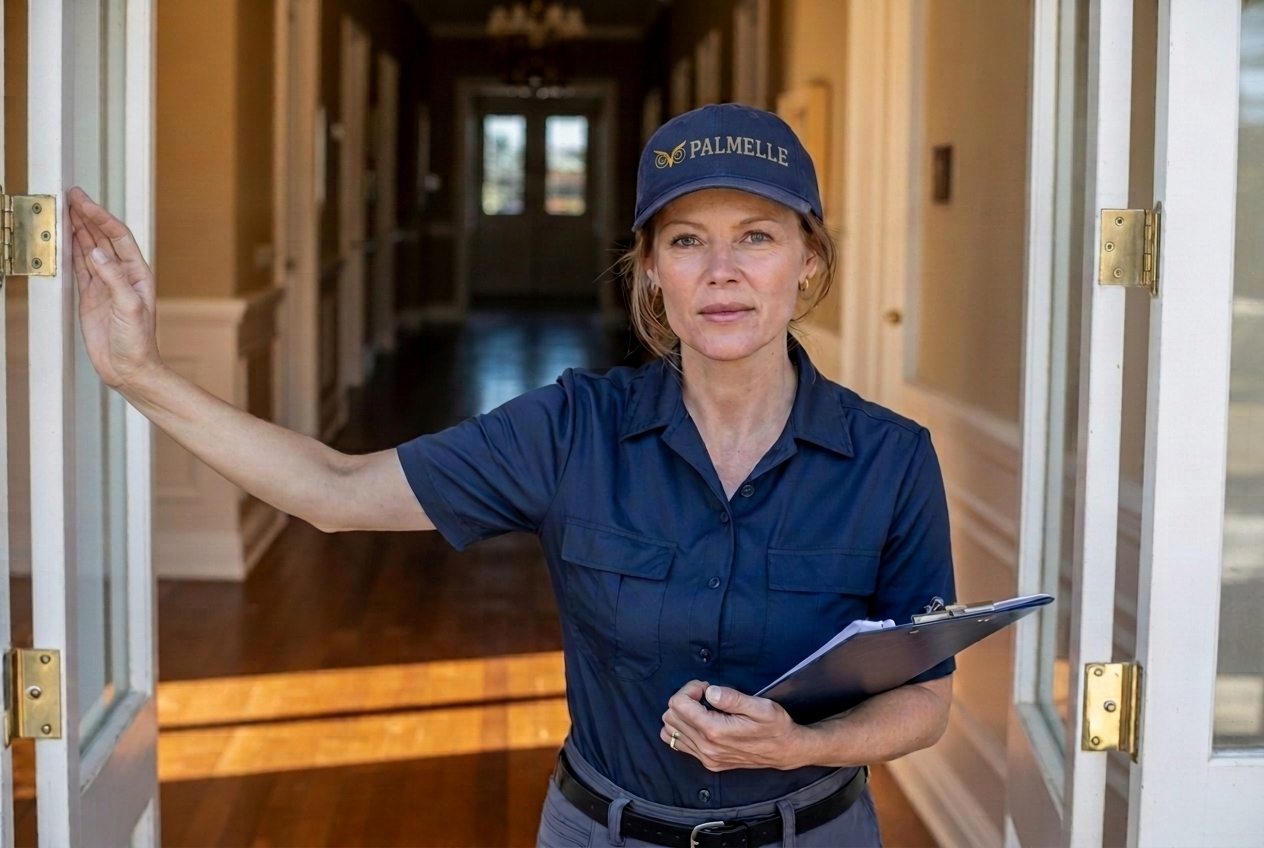
Palmelle offers a professional CAPS assessment for $399, which provides a detailed blueprint of the physical changes your parent's house actually needs, from grab bar placement to lighting adjustments. Instead of
More from Home & Safety → · Back to Perch · Browse all stories