
Your Dad Doesn't Need a Ring Camera. He Needs a Grab Bar.
Why turning your aging parent’s house into a low-resolution reality show is just high-tech guilt mitigation.
You are sitting in a meeting at 2:15 PM on a Tuesday when your phone buzzes with an alert: "Motion detected in Living Room." You open the app to watch a pixelated, fish-eye stream of your seventy-eight-year-old father attempting to retrieve a fallen television remote with a wooden backscratcher. Your heart rate spikes to one hundred and ten, you close the app in a quiet panic, and you do absolutely nothing because you are sitting in a conference room forty miles away. This is the modern illusion of safety: we have swapped actual, physical prevention for a continuous feed of our own helplessness.
The direct answer
Installing indoor cameras in an aging parent's home rarely prevents an emergency; it merely lets you watch it happen in real-time. True safety in the home is physical, structural, and cooperative, not digital and observational. To make a home safe for the long term, you must invest in structural modifications and professional evaluations rather than high-definition surveillance.
The Surveillance Trap and the Illusion of Safety
We buy smart cameras because they are cheap, arrive in twenty-four hours, and require nothing of us but a Wi-Fi password. It is an emotional transaction. We trade a hundred dollars to Amazon for the feeling that we are "doing something" about our aging parents' vulnerability, when in reality, we are just buying a front-row seat to our own anxiety.
A camera is a passive observer. If your mother slips on a loose bathroom tile at 2:00 AM, the camera does not cushion her fall, nor does it automatically call emergency services unless you happen to be awake, staring at your phone, and checking the app at that exact second. What it actually does is create a false sense of security that delays the real, physical work of making a home safe.
Furthermore, surveillance changes the dynamic of your relationship. You stop being a supportive adult child and become an unpaid, long-distance night watchman. Your parent, sensing this shift, often begins to hide their physical struggles, avoiding the camera's line of sight or refusing to use certain rooms altogether just to preserve a shred of their personal dignity.
We call this peace of mind, but it is actually just outsourced hyper-vigilance. You have not made your father safer; you have simply turned yourself into a helpless spectator. True peace of mind does not come from watching a crisis unfold in high definition.
What Actually Keeps People Upright (Hint: It Isn't Wi-Fi)
If you want to prevent a broken hip, you do not need a 1080p feed of the hallway. You need to eliminate the physical hazards that make a fall likely in the first place. This means looking at the environment through the eyes of a professional, not a software engineer.
A Certified Aging-in-Place Specialist (CAPS) looks at things a camera cannot see. They measure the height of stair risers, test the friction coefficient of bathroom tiles, and evaluate whether the lighting in the hallway is bright enough for a seventy-five-year-old eye to distinguish a dog toy from the floor. This is where real safety lives: in grab bars that can support two hundred and fifty pounds of sudden weight, in the removal of throw rugs, and in the installation of handrails on both sides of every staircase.
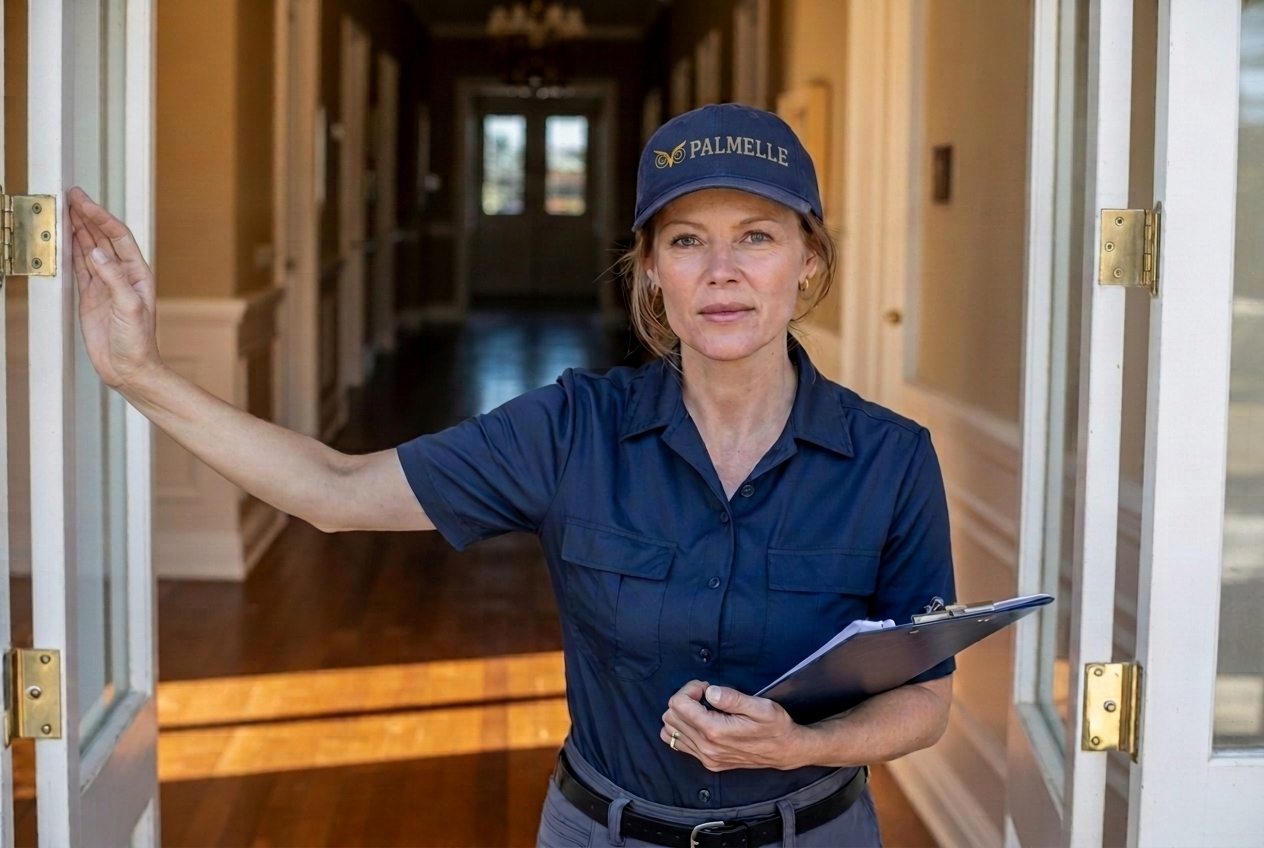
Palmelle offers a professional CAPS Assessment for $399. This is not a digital checklist or a sales pitch for a home renovation company; it is a rigorous, physical evaluation of the home that results in a concrete blueprint for modifications. When you spend $399 on an assessment, you are buying actual risk reduction, not a digital panopticon that only serves to document a crisis after the fact.
Consider the math of a fall. A standard grab bar costs about thirty dollars at a local hardware store, and hiring someone to install it properly might run you another hundred. Compare that to the average cost of a hip fracture, which frequently exceeds tens of thousands of dollars in direct out-of-pocket expenses.
The Hidden Cost of the "Always-On" Relationship
There is a psychological tax to constant surveillance that we rarely talk about. When you install cameras, you are inviting your parent to live under a microscope and inviting yourself to live in a state of perpetual hyper-vigilance. Every notification becomes a potential emergency, turning normal daily activities—like taking a long nap or spending an hour in the garden—into false alarms that trigger panic.
This constant monitoring breeds resentment on both sides. Parents feel managed and infantalized, leading them to resist other, more necessary forms of assistance. Children feel exhausted by the responsibility of monitoring a live feed while managing their own careers and families.
To find out what kind of support actually matches your family's needs without resorting to constant surveillance, Palmelle offers our Help Me Choose service for $199. We look at the actual physical state of your parent, their home environment, and your family's geographic reality to build a practical care plan. If you need to find trusted local professionals to install grab bars or handle daily tasks, you can also explore our vetted directory at /home-services to find people who do the physical work of safety.
We need to shift our focus from monitoring decline to actively supporting independence. This means doing the hard, sometimes uncomfortable work of discussing real physical limitations. It means choosing structural modifications over digital band-aids.
Common mistakes
- Putting cameras in private spaces like bathrooms or bedrooms.
This is a massive violation of dignity that often backfires. Parents will actively avoid these rooms or turn off the lights to maintain privacy, which drastically increases their risk of falling in the dark. - Relying on smart-home motion sensors instead of physical modifications.
A sensor can tell you if your parent hasn't moved for four hours, but it won't stop them from tripping over the threshold between the kitchen and the dining room. Invest in physical modifications like low-profile thresholds and high-contrast lighting first.
Frequently asked
Is it ever ethical to install cameras without a parent's consent?
Almost never, unless there is severe cognitive decline that prevents them from understanding their own safety risks, and even then, it should be a last resort. If a parent has the cognitive capacity to make decisions, installing hidden or unwanted cameras is a breach of trust that can permanently damage your relationship. Instead, have an honest conversation about specific safety concerns and offer physical modifications, like those identified in a $399 CAPS assessment, as a collaborative alternative.
What are the best non-camera smart technologies for aging in place?
Look for environmental sensors rather than visual ones. Smart water leak detectors can prevent slips from plumbing failures, smart thermostats ensure the home doesn't reach dangerous temperatures, and automated, motion-activated path lighting can illuminate the route from the bed to the bathroom at night. These technologies support independence and safety without making your parent feel like they are being watched by a parole officer.
How do I convince my parent to let me make safety modifications to their home?
Frame the modifications around independence rather than decline. Instead of saying, "You need grab bars because you're unstable," try saying, "Let's install these stylish handrails so you can keep living here safely on your own terms." Bringing in an objective third party, such as a professional CAPS evaluator through our $399 assessment, also removes the emotional parent-child dynamic from the conversation, turning a family argument into a professional recommendation.
Sources
More from Home & Safety → · Back to Perch · Browse all stories