
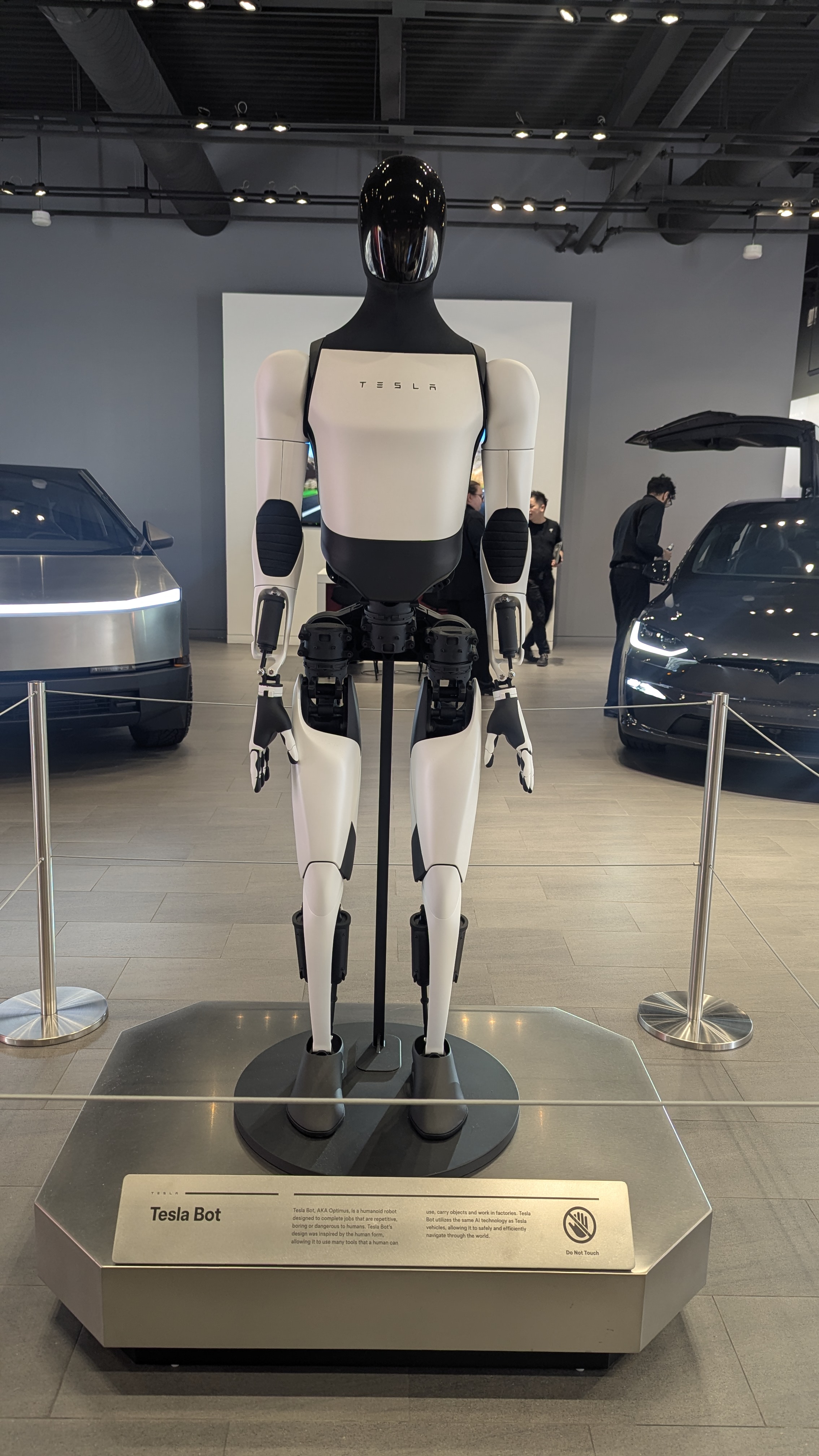
Tesla's 10 Million Robot Army: The Future of Elder Care Arrives Early
Forget the hype; a staggering production target for Optimus robots signals a seismic shift in how aging Americans will be cared for.
The direct answer
The conventional wisdom suggests that advanced robotics for in-home elder care are still decades away. However, Tesla's recent confirmation of a staggering 10 million Optimus humanoid robot production target, with a dedicated factory under construction at Gigafactory Texas aiming for deployment by 2027 [c3, c4, c5], fundamentally challenges this timeline. This ambitious scale suggests a future where robots are not just a novelty but a commonplace utility, potentially addressing the growing shortage of human caregivers. The market for humanoid robots is already projected for exponential growth, from $5.41 billion in 2026 to $50.27 billion by 2035
GOOD NEWS 🤖 According to exclusive report by MarketsandMarkets™, the humanoid robot market is projected to skyrocket from $5.41 billion in 2026 to $50.27 billion by 2035—compounding at a massive 28.1% annually 📈 With Optimus in mass production by the end of this year, Tesla…
— Ming link
. This massive production capacity, if realized, could dramatically alter the economics and availability of in-home assistance for aging Americans, making it far more accessible than current projections suggest
2 days ago, we launched our caretaker robot for seniors. here are my observations: we got so many pre-orders that our website broke. the more interesting fact: a lot of nursing homes also reached out asking for B2B contracts. we're lining up huge pilots, and some are even…
— Audrey link
.
The Scale of Ambition: 10 Million Units
The sheer scale of Tesla's Optimus ambition is hard to overstate. Ashok Elluswamy, the executive now leading the Optimus program, explicitly corrected previous figures to '10 million robots'
"Ashok Elluswamy, Tesla's Director of Autopilot and AI and the executive now running the Optimus program, has clarified the scale of Tesla's humanoid robot ambitions. In a brief but consequential post on X, Elluswamy corrected an earlier figure with three words that will define the debate around Tesla's next decade: 'Correction, 10 million robots.' The number... aligns with previously reported plans for Tesla's second Optimus production line in Austin, which is being architected for a long-term annual capacity of 10 million units — a target Elluswamy now appears to be personally endorsing. ... It is a long-term capacity target for a second, larger production line — one that industry reporting has placed at Gigafactory Texas and expected to begin ramping in 2027."
. This number isn't a vague aspiration; it aligns directly with the planned second, larger production line at Gigafactory Texas, which is being architected for this long-term annual capacity [c3, c4]. Drone footage confirms construction is underway for this dedicated Optimus factory, with phase two targeting high-volume production by summer 2027
"Confirmed: May 27, 2026 — drone footage by Joe Tegtmeyer confirms steel structure rising at Giga Texas North Campus; dedicated Optimus factory officially under construction. Scale: Target 10 million Optimus units/year — ~27,000 robots/day; ... Phase 2 — Texas: High-volume production targeting summer 2027"
. This level of manufacturing scale, aiming for approximately 27,000 robots per day
"Confirmed: May 27, 2026 — drone footage by Joe Tegtmeyer confirms steel structure rising at Giga Texas North Campus; dedicated Optimus factory officially under construction. Scale: Target 10 million Optimus units/year — ~27,000 robots/day; ... Phase 2 — Texas: High-volume production targeting summer 2027"
, suggests a strategy focused on mass-market adoption, not niche applications. It's a commitment that implies a belief in a future where humanoid robots are as common as smartphones.
Economic Implications for Aging Americans
The projected growth of the humanoid robot market, set to surge from $5.41 billion in 2026 to $50.27 billion by 2035 at a 28.1% annual compound rate, underscores the immense commercial potential
GOOD NEWS 🤖 According to exclusive report by MarketsandMarkets™, the humanoid robot market is projected to skyrocket from $5.41 billion in 2026 to $50.27 billion by 2035—compounding at a massive 28.1% annually 📈 With Optimus in mass production by the end of this year, Tesla…
— Ming link
. For aging Americans and their families, this scale has profound implications. The current elder care landscape is fraught with challenges: a shortage of human caregivers, rising costs, and often, a lack of personalized support. If Tesla can indeed ramp up production to millions of units, it could dramatically reduce the cost of in-home assistance. Early indicators from a caretaker robot launch show significant demand, including from nursing homes seeking B2B contracts
2 days ago, we launched our caretaker robot for seniors. here are my observations: we got so many pre-orders that our website broke. the more interesting fact: a lot of nursing homes also reached out asking for B2B contracts. we're lining up huge pilots, and some are even…
— Audrey link
, suggesting that the need for automated support is already acute and widely recognized.
Beyond the Factory Floor: Real-World Impact
The construction of a dedicated, massive Optimus factory at Gigafactory Texas, with site preparation already underway
"At the Gigafactory in Texas, Tesla is designing a second-generation line with a long-term target annual production capacity of 10 million robots. Site preparation for this facility is already underway."
, signifies Tesla's commitment to moving beyond prototypes. This facility is designed for high-volume output, targeting a significant ramp-up by 2027 [c4, c5]. While the exact capabilities of Optimus are still evolving, the sheer volume of production suggests applications far beyond industrial tasks. The vision of a robot capable of performing household chores, providing companionship, and assisting with daily living activities could fundamentally reshape retirement and aging. This move positions Tesla not just as an automaker, but as a key player in the future of human augmentation and support, potentially offering a solution to demographic shifts that strain traditional care models.
Common mistakes
- Focusing solely on industrial applications of Optimus.
The article's angle is elder care. While industrial uses are relevant to Tesla's overall strategy and production scale, the core insight for the reader lies in how this scale impacts personal lives, particularly for seniors. - Treating the 10 million unit target as an immediate reality.
The target is a long-term capacity goal, with significant ramp-up expected around 2027. The article needs to clearly delineate between the target and the timeline for widespread availability, while still emphasizing the significance of the *plan* itself. - Using overly technical jargon without explanation.
The target audience is 55+, and while they may be tech-savvy, the article should prioritize clarity and accessibility over industry-specific terminology, ensuring the implications are easily understood.
GOOD NEWS 🤖 According to exclusive report by MarketsandMarkets™, the humanoid robot market is projected to skyrocket from $5.41 billion in 2026 to $50.27 billion by 2035—compounding at a massive 28.1% annually 📈 With Optimus in mass production by the end of this year, Tesla…
— Ming link
, coupled with early demand signals from sectors like senior care
2 days ago, we launched our caretaker robot for seniors. here are my observations: we got so many pre-orders that our website broke. the more interesting fact: a lot of nursing homes also reached out asking for B2B contracts. we're lining up huge pilots, and some are even…
— Audrey link
, indicates that the future of elder support might arrive much sooner, and at a far more accessible price point, than many anticipate.
Frequently asked
When will Tesla's Optimus robots be available for consumers?
Tesla's Director of Autopilot and AI, Ashok Elluswamy, has indicated that the second, larger Optimus production line at Gigafactory Texas, designed for a capacity of 10 million robots annually, is expected to begin ramping up in 2027. Widespread consumer availability would follow this production ramp.
How could Optimus robots help aging individuals?
Optimus robots are envisioned to assist with daily tasks such as fetching items, medication reminders, light household chores, and potentially offering companionship. The massive production scale could make this type of in-home assistance more affordable and accessible than current human caregiver options.
Is 10 million robots per year a realistic target?
This figure represents Tesla's long-term annual production *capacity* target for its second Optimus line, not necessarily an immediate output. Achieving such a scale would be unprecedented in robotics manufacturing, but Tesla has a track record of ambitious production goals and has invested heavily in automated factories. Early demand and market projections suggest a strong need for such technology.
Sources


More from Technology & Aging → · Back to Perch · Browse all stories