
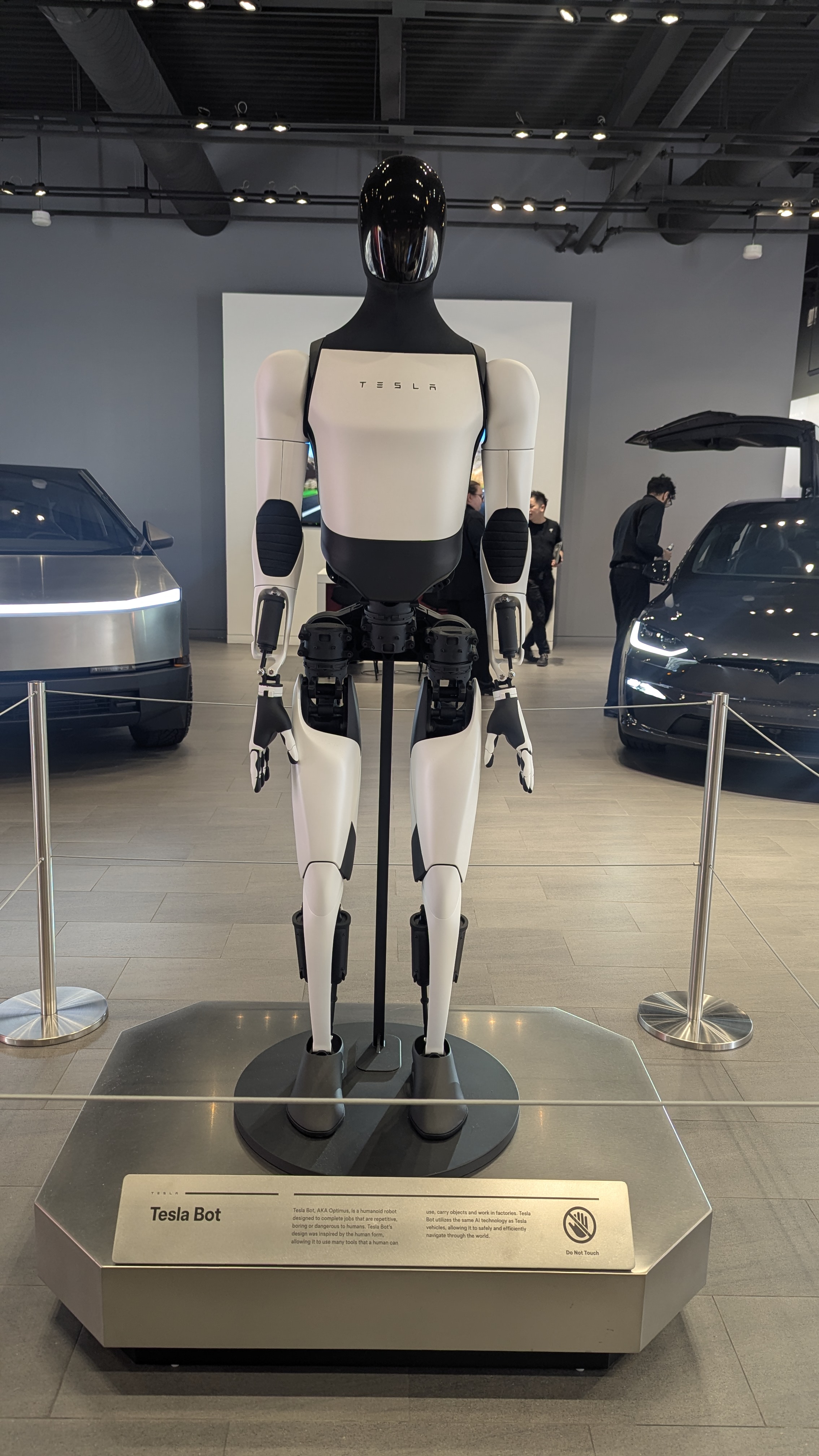
Humanoid Robots: Your Future Caregiver? Not So Fast, Say Experts.
Despite dazzling displays at the World AI Conference, the robots aren't ready for prime time in your parents' living room.
The direct answer
The notion that advanced humanoid robots are on the cusp of revolutionizing in-home elderly care, as often portrayed, is premature. While impressive strides were showcased at the 2026 World Artificial Intelligence Conference, with robots like Abi demonstrating companionship and assistance capabilities [c1, c3], the reality for widespread home deployment remains distant. Significant safety concerns, particularly in unpredictable home environments, and the challenge of generalizing robot performance across diverse individuals and situations, are major roadblocks
2 days ago, we launched our caretaker robot for seniors. here are my observations: we got so many pre-orders that our website broke. the more interesting fact: a lot of nursing homes also reached out asking for B2B contracts. we're lining up huge pilots, and some are even…
— Audrey link
. The projected massive growth of the humanoid robot market, from $5.41 billion in 2026 to $50.27 billion by 2035, fueled by industry giants like Tesla
GOOD NEWS 🤖 According to exclusive report by MarketsandMarkets™, the humanoid robot market is projected to skyrocket from $5.41 billion in 2026 to $50.27 billion by 2035—compounding at a massive 28.1% annually 📈 With Optimus in mass production by the end of this year, Tesla…
— Ming link
, paints a rosy picture. However, early adoption is likely to be confined to structured institutional settings like nursing homes, where environments are more controlled and oversight is more readily available, rather than the chaotic intimacy of private residences. Institutional pilots are already being lined up by early-stage companies
2 days ago, we launched our caretaker robot for seniors. here are my observations: we got so many pre-orders that our website broke. the more interesting fact: a lot of nursing homes also reached out asking for B2B contracts. we're lining up huge pilots, and some are even…
— Audrey link
.
The 'Abi' Effect: Companionship vs. Care
Robots like Abi, developed partly in response to COVID-19 isolation
Abi, the humanoid robot that's piloting in US senior care homes, was born out of the COVID-19 pandemic. Grace Brown started developing the colorful and compact AI robot to cope with isolation during COVID-19 lockdowns while studying mechatronics engineering at the University of…
— Mike Kalil link
, are designed to engage seniors with conversation, music, and games, even remembering residents and building relationships
BREAKING: Andromeda Robotics brings Abi, an emotional companion robot, to the US after 2 years in Australian care homes. • Talks, plays music, runs games, leads group sessions • Remembers residents and builds ongoing relationships • Helps offset care home staffing shortages…
— Ritwik Pavan link
. This focus on emotional support and social interaction is a key selling point. However, the leap from programmed interaction to the nuanced, often unpredictable needs of an elderly individual requiring physical assistance or emergency response is substantial. The early success of Andromeda Robotics bringing Abi to the US after two years in Australian care homes highlights its potential for offsetting staffing shortages
BREAKING: Andromeda Robotics brings Abi, an emotional companion robot, to the US after 2 years in Australian care homes. • Talks, plays music, runs games, leads group sessions • Remembers residents and builds ongoing relationships • Helps offset care home staffing shortages…
— Ritwik Pavan link
, but this doesn't equate to readiness for unsupervised home use. The 'emotional companion' aspect is a powerful draw, but it doesn't solve the fundamental problem of a robot's ability to safely navigate and assist within a cluttered, non-standardized home environment.
Market Boom or Bubble? The Numbers Tell a Story
The humanoid robot market is projected for explosive growth, set to surge from $5.41 billion in 2026 to a staggering $50.27 billion by 2035, with an annual compound growth rate of 28.1%
GOOD NEWS 🤖 According to exclusive report by MarketsandMarkets™, the humanoid robot market is projected to skyrocket from $5.41 billion in 2026 to $50.27 billion by 2035—compounding at a massive 28.1% annually 📈 With Optimus in mass production by the end of this year, Tesla…
— Ming link
. This forecast, especially with major players like Tesla potentially entering mass production with Optimus, fuels the narrative of rapid integration into our lives. Yet, this market projection doesn't differentiate between industrial applications, research, and the highly sensitive domain of elder care. While companies are seeing overwhelming demand, even crashing websites with pre-orders for caretaker robots
2 days ago, we launched our caretaker robot for seniors. here are my observations: we got so many pre-orders that our website broke. the more interesting fact: a lot of nursing homes also reached out asking for B2B contracts. we're lining up huge pilots, and some are even…
— Audrey link
, a significant portion of this interest comes from B2B inquiries for institutional pilots, not direct-to-consumer home sales. This suggests that the immediate market appetite is for controlled environments where challenges can be managed, rather than the free-for-all of home care.
The Generalization Gap: Why Your Home Is a Robot's Worst Nightmare
A core challenge for any AI, and particularly for robots intended for physical interaction, is generalization. Can a robot trained to pick up a pill bottle on a sterile lab table reliably do so on a bedside table cluttered with reading glasses, medication, and a half-finished glass of water?
2 days ago, we launched our caretaker robot for seniors. here are my observations: we got so many pre-orders that our website broke. the more interesting fact: a lot of nursing homes also reached out asking for B2B contracts. we're lining up huge pilots, and some are even…
— Audrey link
observes that many nursing homes are reaching out for B2B contracts, indicating a recognition of the need for structured environments. The complexity of a typical home—varying lighting, unexpected obstacles, different floor surfaces, and the unpredictable movements of a human—poses a far greater challenge than a controlled institutional setting. Until robots can reliably and safely adapt to these infinite variables, widespread home deployment for vulnerable individuals remains a distant, albeit desirable, future.
Common mistakes
- Assuming robots are ready for complex home environments.
The current limitations in safety and generalization mean that a robot's ability to navigate and assist reliably in a non-standardized home is significantly less than in a controlled institutional setting, posing risks to the elderly user. - Confusing emotional companionship with comprehensive care.
While robots can simulate conversation and engagement, they currently lack the sophisticated judgment and physical dexterity required for many critical caregiving tasks, especially in emergencies. - Overlooking the 'institutional first' adoption curve.
The rapid interest from nursing homes [c4] signals a more realistic and safer initial market for humanoid robots, prioritizing controlled environments before tackling the unpredictable nature of private residences.
2 days ago, we launched our caretaker robot for seniors. here are my observations: we got so many pre-orders that our website broke. the more interesting fact: a lot of nursing homes also reached out asking for B2B contracts. we're lining up huge pilots, and some are even…
— Audrey link
. The projected market boom to $50.27 billion by 2035
GOOD NEWS 🤖 According to exclusive report by MarketsandMarkets™, the humanoid robot market is projected to skyrocket from $5.41 billion in 2026 to $50.27 billion by 2035—compounding at a massive 28.1% annually 📈 With Optimus in mass production by the end of this year, Tesla…
— Ming link
is a powerful incentive for optimism, but it shouldn't blind us to the present limitations. Prioritizing institutional care first is a pragmatic, albeit less glamorous, step that acknowledges these hurdles, ensuring safety before scaling to the complexities of private homes.
Frequently asked
When will humanoid robots be safe for in-home elderly care?
There's no definitive timeline, but widespread adoption for complex in-home care is likely years away. Significant advancements in AI for real-world generalization and robust safety protocols are needed. Initial deployments will focus on institutional settings where environments are more controlled and oversight is readily available.
Are robots like Abi already being used for elderly care?
Yes, robots like Abi are being piloted and used in some senior care facilities, primarily for companionship and engagement [c1, c3]. However, these are often in structured environments, and their use for extensive physical assistance in private homes is still limited due to safety and adaptability concerns.
What are the biggest hurdles for robots in elderly care?
The primary hurdles are safety—ensuring robots don't cause harm in unpredictable environments—and generalization—their ability to perform tasks reliably across diverse situations and individuals. The cost and maintenance of these advanced robots also remain significant factors for widespread adoption.
Sources



More from Technology & Society → · Back to Perch · Browse all stories