
The $40,000 Bathroom Mistake: Which Home Modifications Actually Recoup Their Cost?
Most accessibility upgrades tank your home's resale value, but a few smart adjustments actually make you money.
An appraiser walks into a three-bedroom ranch in suburban Ohio and immediately knocks $15,000 off the valuation. The culprit isn't a leaky roof or a cracked foundation; it's an industrial-grade steel grab bar drilled directly into pink bathroom tile, paired with a plastic walk-in tub that looks like a giant cooler. To the adult children who spent $8,000 installing these features for their mother, it was an act of love. To the market, it is a demolition bill waiting to happen.
The direct answer
Highly visible, institutional-looking home modifications almost always depress property value, recouping as little as 50% of their cost at resale. However, modifications built on universal design principles—like curbeless walk-in showers, wider doorways, and smart lighting—frequently return 80% to 100% of their investment. The secret is choosing upgrades that look like high-end luxury choices rather than physical therapy clinics.
The Great Tub Trap and the Luxury Shower Loophole
Let's talk about the walk-in tub. Heavy advertising suggests these $10,000 to $15,000 units are the ultimate safety cure-all. In reality, they are a massive turnoff for prospective buyers who see them as ugly, slow to drain, and difficult to remove.
If you pull out a standard bathtub to install a walk-in tub, you instantly shrink your buying pool to a tiny fraction of the market. Families with young children will cross your home off their list immediately. Plus, the installation often requires upgrading your water heater just to fill the massive basin, adding another $2,500 to the bill.
Instead, invest in a curbless, zero-entry walk-in shower with high-end tile and a built-in bench. This modification costs roughly the same—about $12,000 to $18,000—but appeals to buyers of all ages who see it as a spa-like luxury. It provides the exact same level of fall prevention without signaling physical decline to future buyers.
The Invisible Upgrades that Quietly Pay Off
The best home modifications are the ones you do not notice until you need them. Widening doorways from 30 inches to 36 inches costs about $800 to $1,500 per door, depending on load-bearing walls. This change is virtually invisible to the untrained eye, yet it makes the home instantly accessible for wheelchairs and open for future buyers with strollers or large furniture.
Lighting is another silent winner. Replacing standard toggle switches with rocker-style panels and installing motion-activated LED guide lights along baseboards costs less than $1,000 for an entire house. This simple upgrade significantly reduces fall risks at night while adding a sleek, modern tech aesthetic that younger buyers love.
Then there are grab bars. Do not buy the ribbed, industrial chrome bars that look like they belong in a public park restroom. High-end hardware brands now make beautiful, heavy-duty grab bars that double as toilet paper holders or towel racks, costing around $80 to $150 each.
How to Audit Your Space Before Swiping Your Card
Before you let a local contractor convince you to rip out your walls, you need an objective assessment. Contractors want to sell you construction; they do not necessarily understand the nuances of physical mobility or real estate valuation. This is where a Certified Aging-in-Place Specialist (CAPS) comes in.
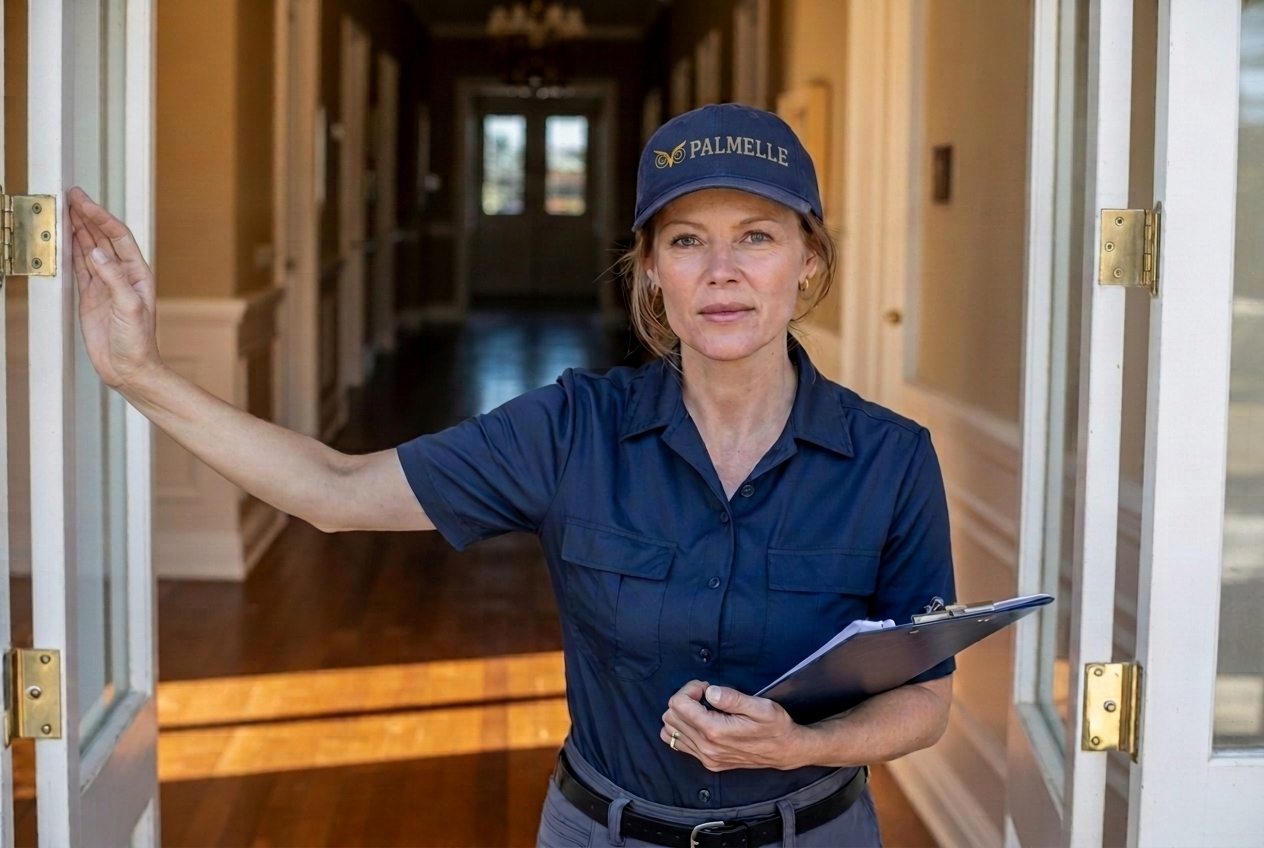
Palmelle offers a professional CAPS Assessment for $399. A specialist will evaluate the home's layout, identify real risks, and provide a tailored blueprint of modifications that balance safety with financial wisdom. It prevents you from spending $10,000 on a ramp when a $500 threshold modification and a smart lock would have solved the actual problem.
If you decide to move forward with the physical work, finding vetted professionals is crucial. You can explore trusted local providers through Palmelle's catalog at /home-services to ensure the installation matches the high aesthetic standard required to preserve your home equity.
Common mistakes
- Installing permanent outdoor ramps too early.
A massive wooden ramp winding across the front lawn screams vulnerability and immediately lowers curb appeal, knocking up to 10% off the home's value. Use temporary aluminum modular ramps instead, which can be disassembled in an afternoon when it is time to sell. - Over-customizing the kitchen counters.
Lowering all kitchen countertops to wheelchair height ruins the kitchen for 95% of future buyers, requiring a complete gut remodel to fix. Instead, install pull-out under-counter prep boards or a single multi-level island that accommodates sitting and standing.
Frequently asked
Do grab bars always hurt resale value?
No, but the style matters immensely. Industrial-looking chrome bars can turn off buyers, but dual-purpose designer grab bars—such as those integrated into towel bars or shampoo shelves—add modern appeal. Buyers view these as high-end bathroom finishes rather than safety hardware.
What is the average return on investment for a zero-threshold shower?
A curbeless walk-in shower typically returns 70% to 85% of its cost at resale. Because modern design trends favor large, open shower enclosures over traditional tubs, this modification is highly attractive to almost all buyer demographics, not just those with mobility needs.
Can smart home tech replace physical modifications?
Smart home technology can supplement physical changes but cannot replace them. Features like smart locks, voice-activated lighting, and video doorbells cost very little, appeal to tech-savvy buyers, and eliminate many trip hazards, making them excellent low-cost investments.
Sources
More from Home & Safety → · Back to Perch · Browse all stories