
The Golden Cage: Why Aging in Place Is Often a Slow-Motion Social Disaster
We worship the independence of the family home, but staying put without a plan often trades physical safety for profound isolation.
My friend's mother, Clara, lives in a pristine, four-bedroom colonial in Connecticut. The lawn is manicured, the kitchen was remodeled in 2018, and the mailbox is exactly forty steps from the front door. But Clara hasn't spoken to a neighbor in three years, her world has shrunk to the radius of her television remote, and her last three meals were toast and canned soup. This is the quiet reality of the aging-in-place dream: a beautiful, familiar fortress that slowly morphs into a solitary confinement cell.
The direct answer
Aging in place only works if you actively design for human connection and physical safety, rather than just hoping the status quo holds. It requires an honest audit of social infrastructure, a Certified Aging-in-Place Specialist (CAPS) home assessment to identify physical hazards before they cause a crisis, and a willingness to spend money on modifications. Without these active interventions, staying home is not independence—it is just stagnation in a familiar zip code.
The Nostalgia Tax and the Myth of Independence
We are conditioned to view moving into a care facility as a failure of love or resources. Paid referral platforms like A Place for Mom or Caring.com bombard us with ads suggesting that staying home is the only dignified choice. What they conveniently omit is that they earn massive commissions by placing people in facilities that pay them, rather than helping you adapt your home.
But staying in a massive, drafty house with steep stairs and zero nearby friends is its own kind of tragedy. Social atrophy is not a vague emotional concern; it has a direct physical toll. Isolation is scientifically linked to cognitive decline, heart disease, and depression.
When a person's daily human contact is limited to the Amazon delivery driver, their world shrinks and their mobility drops. True independence is not about the deed to a house; it is about autonomy. If your parent cannot leave the house without assistance, they are not independent—they are trapped.
Consider the physical layout of the average suburban home built in the 1980s. It was designed for young families with high energy levels, not for someone managing arthritis or mild cognitive decline. Forcing an older adult to navigate this space alone is not a gift; it is a burden.
We need to stop equating the physical structure of a childhood home with safety. Safety is dynamic, requiring human interaction and physical adaptability. When the home stops providing those, the walls begin to close in.
The Physical Audit: Moving Past Grab Bars and Into Reality
Most people think home modification means putting a plastic chair in the shower and buying a shiny metal grab bar. That is not a plan; that is a reaction to a fall that already occurred. A proper modification strategy requires a Certified Aging-in-Place Specialist (CAPS) assessment to systematically identify friction points before they become emergencies.
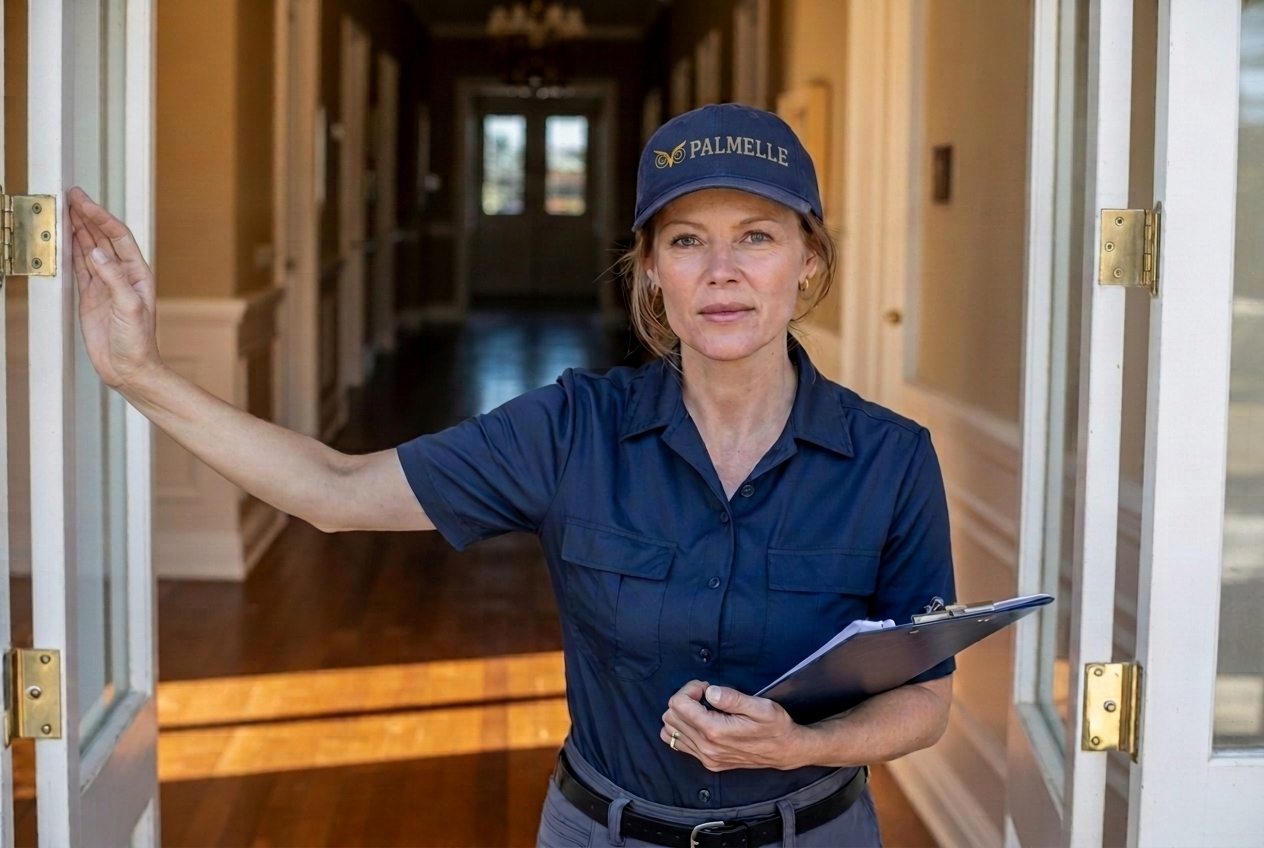
At Palmelle, we offer a professional Assessment (CAPS aging-in-place) for $399 to bring an expert into the home to map out these exact risks. They do not just look at stairs; they look at lighting levels, threshold heights, and doorway widths. They evaluate whether the bathroom can handle a curbless shower or if the kitchen counters are too high for safe meal prep.
Lighting is one of the most overlooked hazards in the home. A typical 75-year-old requires four times as much light as a 25-year-old to see clearly. Simply upgrading to rocker switches and installing motion-activated LED strip lighting under cabinets can dramatically reduce fall risks.
This is not about making the house look like a hospital wing. High-end, thoughtful modifications—like zero-step entries, smart water-leak detectors, and pull-down cabinet shelving—actually increase home value while preserving dignity. You can find vetted contractors who specialize in these subtle, high-impact changes through our directory at /home-services.
The goal is to make the home work for the person, not the other way around. When the environment is supportive, your parent spends less energy on basic survival and more on living.
Smart Tech Is Not a Substitute for Human Faces
We love to throw technology at this problem. We buy our parents smart speakers, video doorbells, and fall-detection pendants, thinking we have built a digital safety net. While a smart thermostat or an automated lighting system is incredibly useful, a screen is not a substitute for a neighbor.
Technology should be used to reduce the physical load of home maintenance, not to replace human interaction. If your father is using Alexa to turn off the lights because his arthritis makes switches painful, that is a win. If he is talking to Alexa because he has not spoken to another human all day, that is a systemic failure.
The goal of smart tech should be to free up energy for the real world. Use smart locks to let in trusted neighbors or local service providers, automated medication dispensers to prevent dosage errors, and simple video calling devices to keep family close. Remember: the best safety feature in any home is a neighbor who notices when the blinds aren't opened by 9:00 AM.
Consider smart home sensors that track movement patterns without invading privacy. These devices can alert you if your parent hasn't visited the kitchen by 10:00 AM, without the need for intrusive cameras. This allows you to step back from constant worrying and focus on quality conversations.
Tech is the scaffold, not the building itself. Use it to automate the boring stuff so your parent has the energy to walk down the street and get a cup of coffee with a friend.
Common mistakes
- Waiting for a fall to trigger home modifications.
Retrofitting a home during a hospital discharge is expensive, rushed, and incredibly stressful. Spending $399 on a CAPS assessment now allows for thoughtful, budget-friendly updates on your own timeline. - Overestimating the social value of 'familiar neighbors.'
Neighbors move, pass away, or are busy with their own lives. A neighborhood that was vibrant in 1995 is often a quiet commuter suburb today, meaning you must actively build a new local network.
Frequently asked
How much do basic home modifications for aging in place typically cost?
A minor retrofit—adding grab bars, improving lighting, and installing smart locks—costs between $1,500 and $5,000. Major modifications, like installing a curbless walk-in shower or a wheelchair ramp, can range from $10,000 to $25,000. Starting with a professional $399 assessment helps you prioritize these expenses so you do not waste money on unnecessary renovations.
What is the difference between a CAPS assessment and a standard home inspection?
A standard home inspector looks at the structural integrity of the building, like the roof, wiring, and foundation. A Certified Aging-in-Place Specialist (CAPS) assesses how a person interacts with that space, focusing on mobility, sensory changes, cognitive needs, and daily safety. It is the difference between checking if the plumbing works and checking if your parent can safely use the shower.
My parent refuses to leave their home but is clearly lonely. What are the first steps?
Start by auditing their weekly social interactions and identifying physical barriers to leaving the house. Consider hiring local home services to help with light housekeeping or transportation, which frees up their energy for social outings. If they need a structured comparison of alternative local living options, our Help Me Choose service is available for $199 to help weigh the pros and cons of staying versus moving.
Sources
More from Home & Safety → · Back to Perch · Browse all stories