
The High Cost of Privacy: Why Your Aging Parent's Digital Secrecy is a Hazard
We protect our parents' independence until the quiet moments between phone calls become a safety risk. Here is when to watch, how to track, and what it costs.
My friend Sarah spent three years respecting her 78-year-old mother’s right to a private life. She didn’t install cameras, she didn't monitor her bank accounts, and she didn't track her phone. Then her mother spent twelve hours on the cold tile of her kitchen floor with a fractured pelvis, just three feet from a landline she couldn't reach. Privacy is a beautiful concept when you are forty-five, but when you are eighty, it can be a fast track to a nursing home.
The direct answer
If your parent wants to age in place, digital privacy must yield to safety. This does not mean installing invasive cameras in the bathroom, but it does mean deploying motion sensors, smart plugs, and ambient fall detection. Expect to spend $150 to $500 upfront for hardware, plus $15 to $40 a month in subscription fees, to buy yourself peace of mind and keep them out of a care facility.
The Myth of the Unmonitored Home
Most people think they can manage aging in place with a weekly visit and a phone call. But the data from the Centers for Disease Control and Prevention shows that one out of four older adults falls each year, and less than half tell their doctor. If they aren't telling their doctor, they certainly aren't telling you.
The alternative to monitoring isn't independence; it is an emergency room visit that leads directly to a care facility. Once a parent enters a nursing home after a fall, the average stay costs $7,908 a month for a semi-private room, according to national averages. Installing $300 worth of smart sensors is not an invasion of privacy—it is a financial and physical shield.
We need to reframe what surveillance means. It is not about spying on their conversations or watching them undress. It is about tracking activities of daily living passively. If the refrigerator door hasn't opened by 10:00 AM, or if the bathroom motion sensor has been active for ninety minutes, you need to know without waiting for them to call for help.
The Gear That Actually Works (And What It Costs)
Skip the expensive, branded systems that charge $50 a month for cheap hardware. Start with a smart thermostat like an Ecobee ($190 to $250) paired with three or four remote room sensors. These do not record video or audio, but they track temperature and motion, letting you know if your father is up and moving through the hallway at his usual hour.
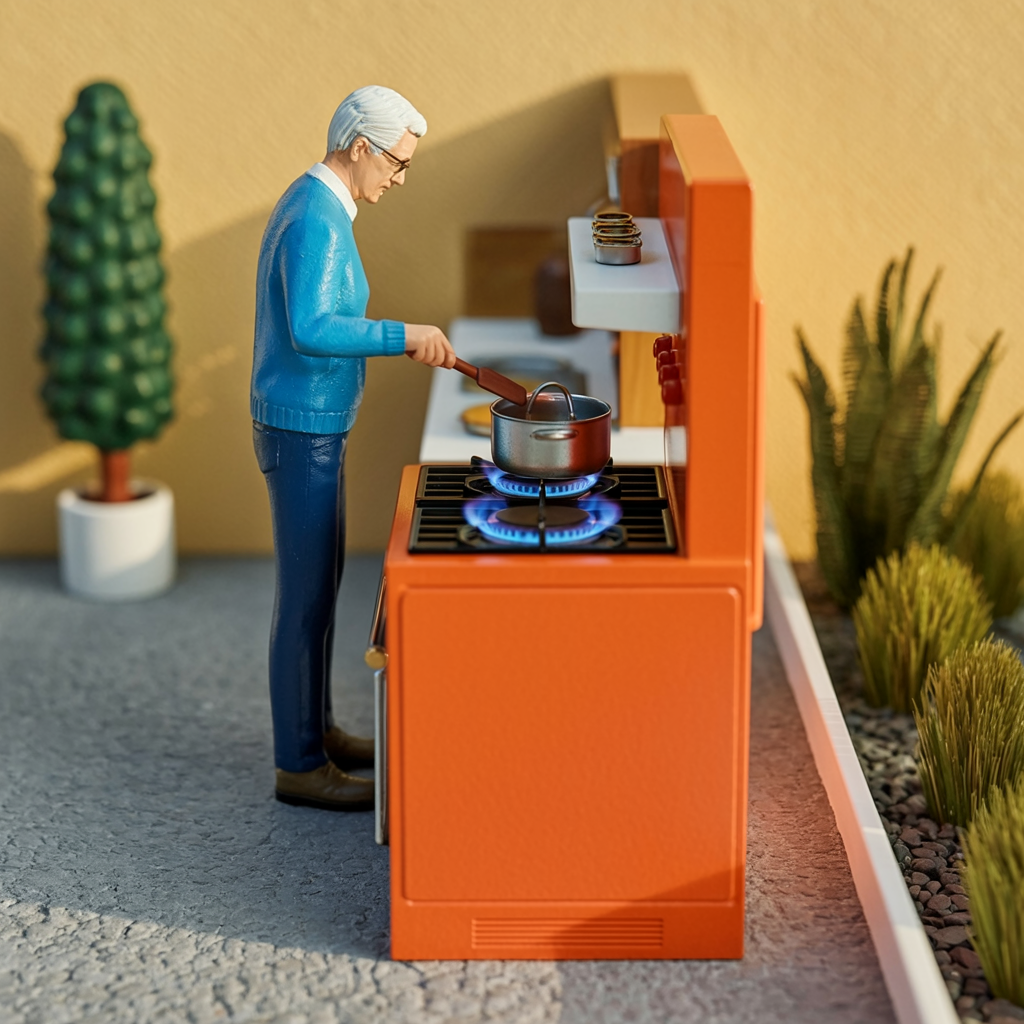
Next, address the kitchen. A smart stove shut-off device like the Wallflower ($130) or the iGuardStove ($350) connects to the stove's power supply. It automatically cuts power if the stove is left unattended for more than five minutes, and it sends an alert to your phone. It turns a potential house fire into a simple text message.
For fall detection, skip the ugly plastic pendants that your mother will inevitably leave on her nightstand because she doesn't want to look old. Look at ambient radar systems like Wally or Vayyar Home ($250 to $300, plus a $10 monthly fee). These mount on the wall, use radio waves to map the room in 3D, and can detect a fall even in the dark or through a shower curtain, all without cameras.
The CAPS Assessment: Professional Eyes on the Problem
You cannot solve this solely with gadgets bought on Amazon. Before you start drilling holes in the walls or buying hardware, you need an objective look at the physical space. A Certified Aging-in-Place Specialist (CAPS) is trained to identify the subtle traps in a home—the transition strips between rooms, the height of the toilet, the wattage of the hallway lightbulbs.
Palmelle offers a professional CAPS Assessment for $399. A licensed specialist walks through the home, either in person or virtually, to evaluate every room. They do not sell hardware, so they have no incentive to recommend expensive gadgets you do not need. They give you a clear, prioritized list of modifications to make the home safe.
Compare that $399 investment to the alternatives. A single trip in an ambulance can easily run $1,500 out of pocket. If the assessment reveals that the home requires extensive structural modifications, you can use our curated directory of local home services at /home-services to find vetted contractors who won't gouge you.
Common mistakes
- Buying the 'Help, I've Fallen' Button Too Early
These pendants carry a massive social stigma, and up to 80% of older adults refuse to wear them or leave them on the dresser. Focus on passive, ambient sensors that monitor the home, not the person, so your parent doesn't feel branded as frail. - Trusting Paid Referral Sites for Care Advice
If your parent eventually needs a care facility, sites like A Place for Mom or Caring.com will only show you facilities that pay them a massive commission. Palmelle uses federal CMS and state inspection data to calculate a Palmelle Clarity Score from 0 to 100, showing you every option, not just the ones who pay us.
Frequently asked
How do I bring up the topic of home monitoring with a stubborn parent?
Do not frame it as 'I am watching you because you are getting old.' Frame it as a favor to you. Say, 'I worry about you, and having these simple motion sensors helps me sleep at night without calling to check on you three times a day.' Emphasize that there are no cameras involved and their personal privacy is preserved.
Does Medicare pay for smart home monitoring or CAPS assessments?
No. Medicare does not cover smart home technology, monthly subscription fees, or preventative home safety assessments. These are out-of-pocket expenses. However, spending $399 on a Palmelle CAPS assessment can save you tens of thousands of dollars by delaying or preventing a move to an expensive nursing home.
What is the difference between a smart home sensor and a care facility?
Smart home sensors allow your parent to remain independent in their own house for years longer by alerting you to early warning signs of physical decline. A care facility provides 24-hour supervision and hands-on help, but at a massive financial cost. Keeping them at home safely requires proactive monitoring before a catastrophic event occurs.
Sources
More from Home & Safety → · Back to Perch · Browse all stories