
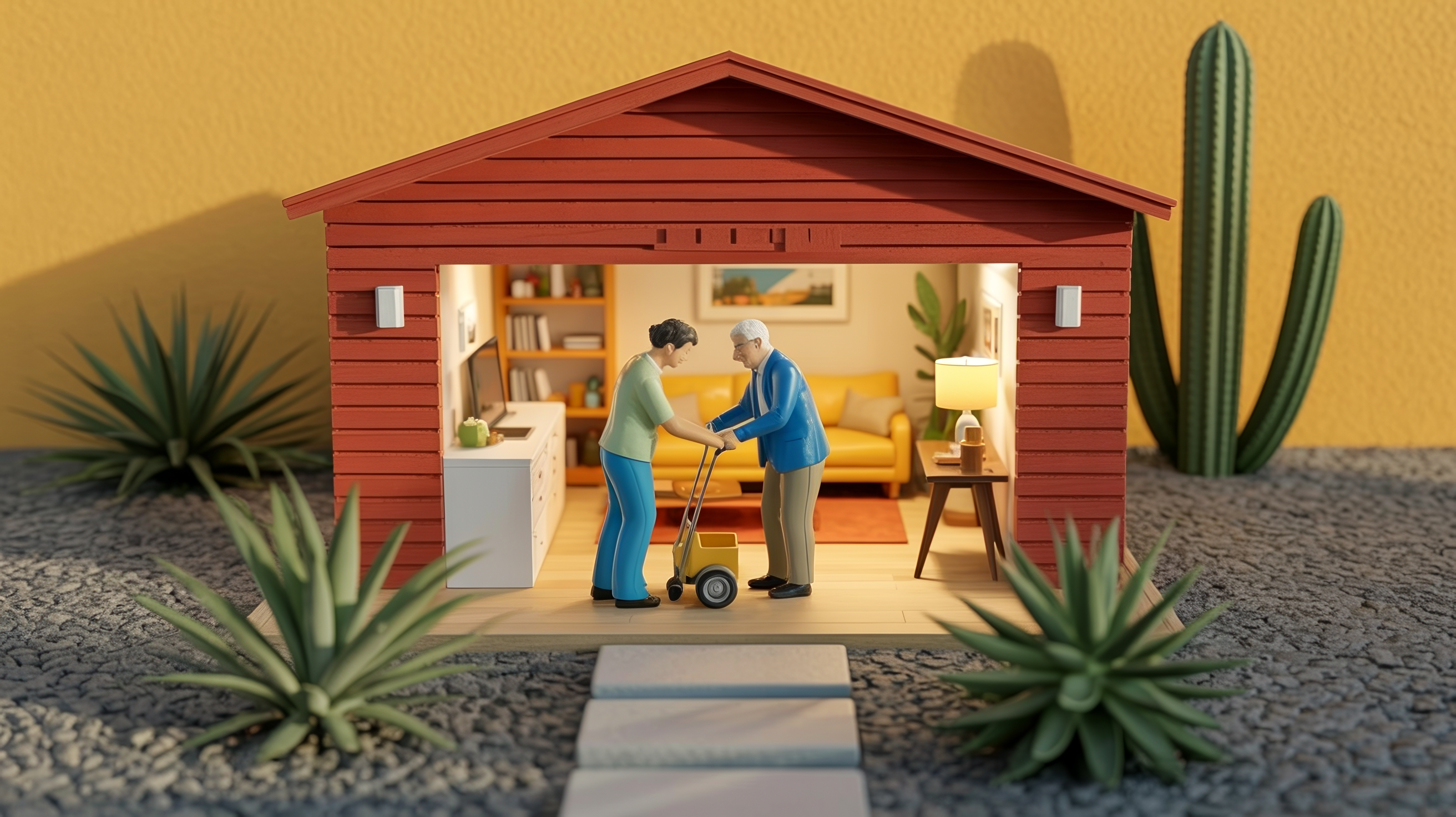
The Velvet Prison: When "Aging in Place" Becomes Solitary Confinement
We’ve been told that staying home is the ultimate victory, but for many, it’s a slow-motion eviction from the world.
My friend's mother, Helen, spent her 82nd year in a gorgeous three-bedroom colonial in New Jersey, staring at a framed print of the Amalfi Coast while waiting for the mail carrier. Her family celebrated this as a triumph of independence because she hadn't "gone into a home." In reality, her world had shrunk to a twenty-foot radius between her recliner, the microwave, and a bathroom with a dangerously high tub ledge. We have turned "aging in place" into an unquestioned moral imperative, but for millions of older adults, it is a slow-motion sentence to solitary confinement.
The direct answer
Aging in place works beautifully until it doesn't, and the tipping point is almost always social isolation and physical safety, not a sudden diagnosis. If an older adult spends more than 20 hours a day alone, relies on family for basic survival tasks, or has stopped leaving the house because of steps or driving anxiety, the home is no longer a sanctuary. It is a cage that costs thousands of dollars a month to maintain while actively accelerating cognitive and physical decline.
The Romantic Lie of the Forever Home
The phrase "aging in place" was coined by policy advocates, but it was perfected by marketers who realized they could sell a comforting illusion. We picture grandfather teaching his grandson to wood-carve in the garage, but the reality is more likely an 84-year-old eating cold toast over the sink because she is terrified of using the stove. The physical infrastructure of the average American suburb is actively hostile to anyone who cannot drive a car or climb stairs.
Retrofitting a home to be genuinely safe is not a matter of buying a plastic shower stool and hoping for the best. To do it right, you are looking at widening doorways for $2,500, installing a ramp for $3,500, and remodeling a bathroom for upwards of $15,000. If you want to know if a home can actually handle this transition, Palmelle offers an Assessment (CAPS aging-in-place) for $399 to evaluate the physical space before you spend a dime on construction.
Even if you pay for the physical modifications, you cannot retrofit a neighborhood. If the nearest grocery store is a four-mile drive down a six-lane highway, a non-driving adult is effectively grounded. The physical house remains, but the community around it vanishes, leaving behind an island of quiet desperation.
The Hidden Math of Home Care vs. Community Care
Most families choose the home option because they assume a care facility is an expensive defeat. Let's look at the actual numbers. Hiring a private aide for just eight hours a day, five days a week, averages about $4,800 a month in most metro areas, leaving 128 hours a week where your parent is entirely alone.
If you need 24-hour coverage, that bill skyrockets to over $15,000 a month, a sum that eclipses even the most high-end residential options. By contrast, a quality care facility often costs between $5,000 and $8,000 a month, which includes meals, utilities, maintenance, and constant human interaction.
Paid referral platforms like A Place for Mom, Caring.com, or SeniorAdvisor will gladly show you a curated list of facilities, but they systematically omit any place that doesn't pay them a hefty commission. They are sales engines, not directories, which is why we built our own database using federal CMS and state inspection data to give you the real picture.
When you look at the math, staying home with patchwork help is often the most expensive way to buy the worst outcome. You are paying premium rates for an isolated life, while a structured community offers built-in engagement for a fraction of the hourly cost.
The Cognitive Cost of the Quiet House
Human brains do not do well in silence. Research shows that social isolation is associated with a 50 percent increased risk of dementia. When an older adult stops hearing new voices, engaging in new conversations, or even arguing about what to watch on television, their cognitive processing speed drops off a cliff.
We often mistake the quiet of a parent's home for peace, when it is actually atrophy. In a residential community, even the minor frictions of daily life—walking to a shared dining room, greeting neighbors, deciding which activity to avoid—keep the brain active and engaged. These tiny, daily social transactions are the cognitive equivalent of lifting weights.
When we insist on keeping a parent at home at all costs, we are often prioritizing our own comfort over their mental sharpness. We feel good because we kept our promise to never put them in a home, while they sit in a quiet room, watching their cognitive world shrink to the size of a television screen.
Common mistakes
- Treating "going to a home" as a moral failure rather than a lifestyle upgrade.
This guilt forces families to keep parents in dangerous, isolating home environments long after they should have moved. A vibrant care facility can restore the social life and independence that a quiet suburban home slowly chokes out. - Trusting paid placement agencies to give you an unbiased list of local options.
Platforms like A Place for Mom or Caring.com hide excellent local facilities simply because those places refuse to pay them a percentage of your parent's first month's rent. You end up missing the best options in your zip code because of a hidden paywall.
More from Life & Community → · Back to Perch · Browse all stories