
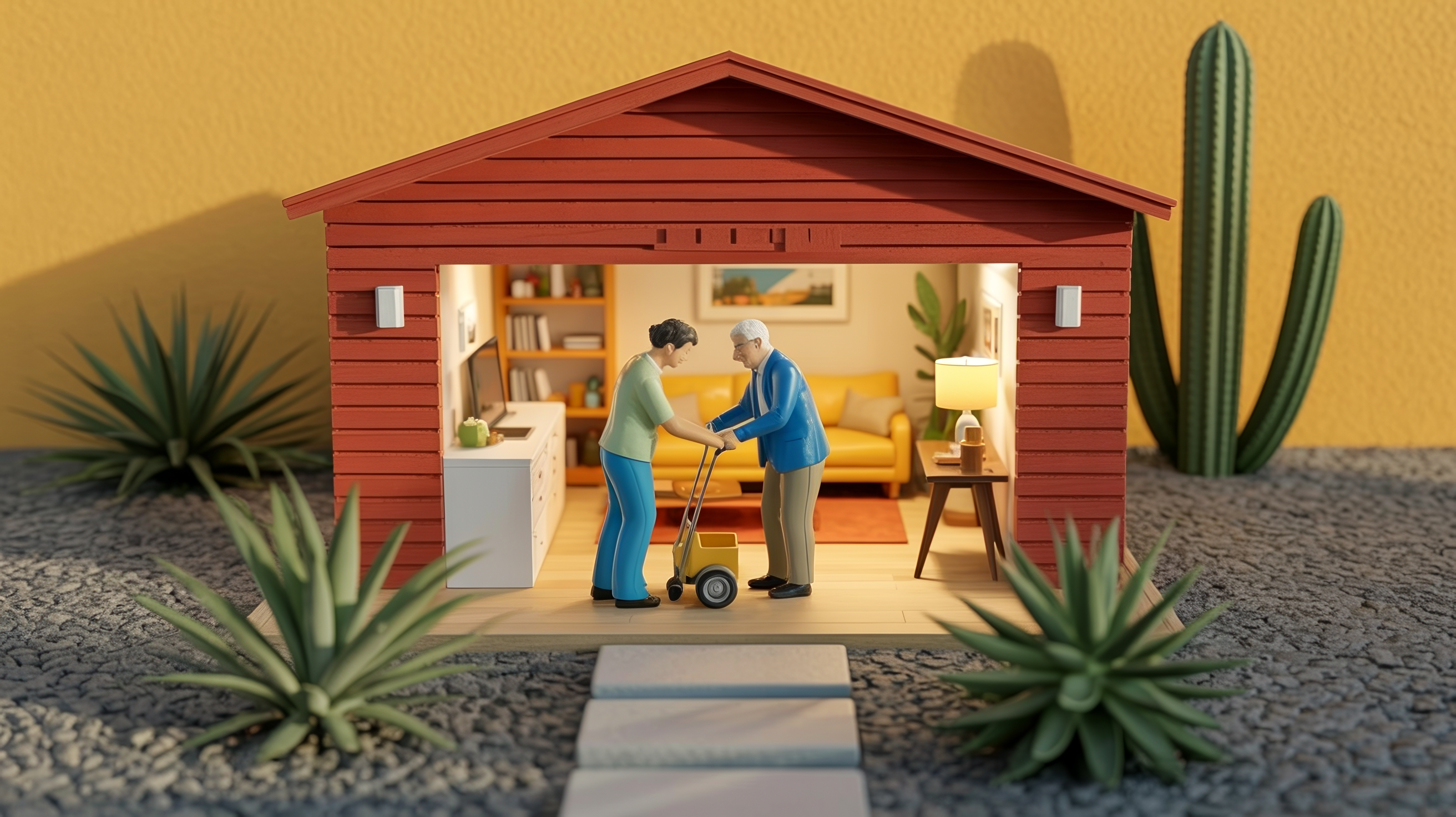
The Ozempic Bone Trap: Why the Senior Slimdown Trend Is a Fast Track to a Broken Hip
Rapid weight loss looks great on Zoom, but underneath the surface, it is quietly turning older skeletons into chalk.
At seventy-two, your mother is suddenly fitting into her classic Levi's from 1994. The family is thrilled, the neighbors are asking for her secret, and her doctor is nodding along as the scale drops thirty pounds in four months. But beneath the celebratory new wardrobe lies a terrifying, invisible math problem.
The direct answer
When adults over sixty-five lose weight rapidly on GLP-1 medications, up to forty percent of that lost mass is lean muscle, not fat. This sudden loss of skeletal muscle—known as sarcopenia—destroys balance and reduces bone density, making a catastrophic fall almost inevitable. Without aggressive strength training and targeted protein intake, these medications are fast-tracking older adults directly into a nursing home.
The Invisible Eviction of Muscle and Bone
We have been conditioned to believe that a lower number on the scale is an unalloyed victory. But when a sixty-five-year-old loses weight, the body doesn't just burn through fat reserves. It harvests muscle and bone to make up the energy deficit, a process that happens far faster on GLP-1s because of how quickly they suppress appetite.
Consider the mechanics of a fall. Muscle is the active suspension system of the human body, absorbing shocks and correcting your balance when you trip over a rug. When you strip away that suspension system, every minor stumble becomes a hard, unbuffered impact directly to the pelvis.
And that pelvis is already compromised. Studies show that rapid weight loss accelerates bone mineral density loss at the hip—the exact spot where a fracture can permanently end a person's independent living. It is a slow-motion structural collapse disguised as a cosmetic victory.
This structural collapse is particularly dangerous because it happens in silence. You do not feel your bones thinning, and you do not notice your muscle fibers shrinking until you try to stand up from a low toilet seat and find your legs cannot lift you. By then, the structural reserve that took decades to build has been depleted in a matter of weeks.
The Cold, Hard Math of a Broken Hip
Let's talk about what happens after the fall, because the numbers are brutal. One in three adults over the age of fifty dies within twelve months of suffering a hip fracture. For those who survive, the path forward is rarely a return to normal life.
Nearly half of those who break a hip never regain their previous level of independence. They transition from living in their own homes to requiring full-time assistance, often moving permanently into a care facility.
This isn't an abstract risk; it is a predictable trajectory. If you are paying $1,000 a month out of pocket for these medications, you must also invest the time and energy into preserving your physical frame, or you will end up spending thousands more on rehab and long-term assistance.
The physical decline is matched by a steep emotional toll. When an older adult loses their mobility, their social circle shrinks, their risk of depression spikes, and their cognitive health often takes a sharp downward turn. The loss of muscle is, quite literally, the loss of connection to the outside world.
We often see families scramble after a break, searching for open beds in a nursing home under immense pressure. Paid referral sites like A Place for Mom or Caring.com will quickly push you toward whichever local options pay them a commission, completely ignoring the ones that do not. They won't tell you about the facility's actual track record or safety history.
How to Keep the Weight Off and the Bones Intact
If you or your parent are going to use these medications, you cannot treat them as passive therapies. You need a deliberate, aggressive strategy to protect your skeleton. This starts with demanding a baseline DXA scan to measure bone density before the first injection.
Second, protein is no longer optional; it is a daily job. An older adult on a GLP-1 needs to consume roughly 1.2 to 1.5 grams of protein per kilogram of body weight daily just to slow down muscle wasting. If they aren't hungry enough to eat that much food, you need to supplement with high-quality protein shakes.
Finally, resistance training must be treated like a life-saving prescription. Lifting weights or using resistance bands twice a week is the only way to signal to the body that it needs to keep its muscle and bone, even while the fat is melting away.
If you want to ensure their current home is safe from tripping hazards while they build back their strength, our Assessment (CAPS aging-in-place) is $399. If they need to transition to a safer environment altogether, our Help Me Choose service is $199.
We evaluate options using federal CMS and state inspection data to calculate a Palmelle Clarity Score from 0 to 100, ensuring you get the real story. Do not wait for a crisis to start looking at these numbers, because a broken hip leaves you with very few choices and even less time.
Common mistakes
- Celebrating the scale without testing physical strength
A lower weight looks good on paper, but if your parent can no longer do five consecutive chair rises without using their hands, they are in immediate danger. Track their physical function, not just their pounds. - Assuming the prescribing doctor is monitoring muscle mass
Most weight-loss clinics and online subscription services focus solely on the scale. You must advocate for body composition tracking or hire an independent physical therapist to assess balance and strength.
Frequently asked
Is there a safe rate of weight loss for someone over 70?
Generally, older adults should aim for a slow, controlled loss of no more than one pound per week. Anything faster dramatically increases the risk of muscle wasting. If the scale is dropping faster, speak with the prescriber about adjusting the dosage down.
How do I know if my parent is losing too much muscle?
Watch their daily movements
More from Life & Community → · Back to Perch · Browse all stories