
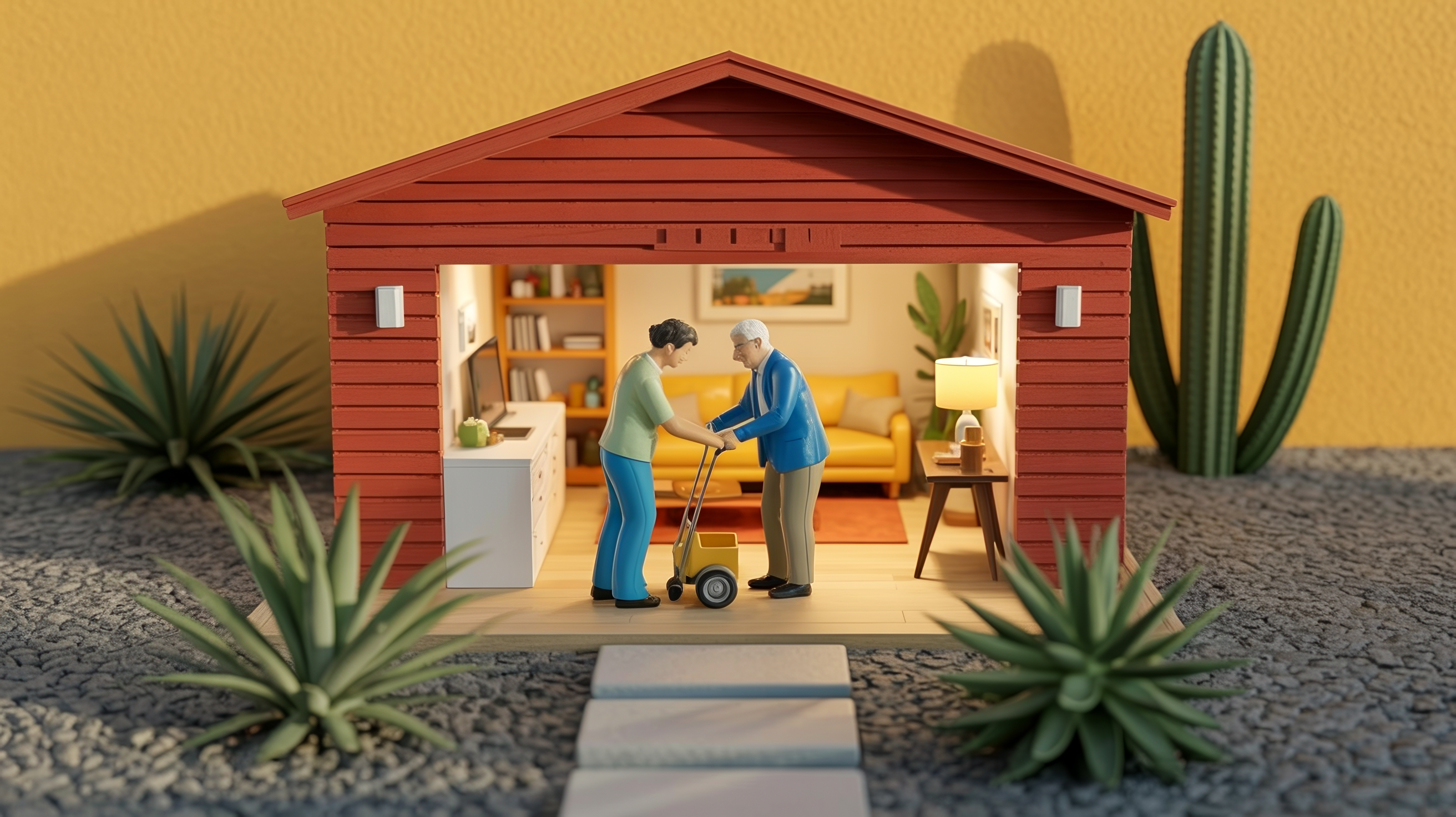
The Muscle Math of Aging
After 60, walking is not enough. Here is the blunt truth about what actually keeps people out of a nursing home.
At age thirty, losing muscle is a cosmetic annoyance. By seventy-five, it is a slow-motion emergency that dictates whether you can get off the toilet without help. Every decade after forty, the human body sheds up to eight percent of its muscle mass, a biological tax that accelerates to fifteen percent after age seventy. If you think a daily thirty-minute stroll in the neighborhood is enough to stop this slide, you are bringing a butter knife to a gunfight.
The direct answer
The only exercise that reliably keeps older adults independent is progressive resistance training combined with fast-twitch power moves. To stay out of a care facility, a person needs the quad strength to stand up from a low chair without using their hands and the balance to catch themselves mid-trip. Walking keeps the heart healthy, but muscle mass and power are the actual currency of physical autonomy.
The Cruel Math of Sarcopenia and Power Loss
Let us talk numbers because biology does not care about feelings. Sarcopenia—the age-related loss of muscle mass—is not just about getting smaller arms. It is the systematic dismantling of your physical safety net.
Even worse is the loss of muscle power, which is the ability to move weight quickly. Power declines twice as fast as strength, and it is the exact attribute that prevents a slip from becoming a broken hip.
When a seventy-eight-year-old trips on a curb, their heart rate does not matter. What matters is how fast their nervous system can fire their fast-twitch muscle fibers to plant their foot and stabilize their torso. Walking does not train these fibers because it is a slow, repetitive, low-impact movement.
To keep those fast-twitch fibers alive, you have to lift heavy things, push against resistance, or move with deliberate speed.
This does not mean your seventy-five-year-old father needs to join a CrossFit gym and start doing clean-and-jerks. It means he needs to perform movements that challenge his muscles to the point of fatigue. If he can lift a weight fifteen times without his muscles burning, the weight is too light to trigger muscle growth or preservation. He is maintaining his current state of decline, not building a buffer against it.
The Fallacy of the 10,000-Step Goal
The 10,000-steps metric was invented by a Japanese clock company in 1965 to sell pedometers. It is a marketing gimmick, not a biological law. While walking is excellent for cardiovascular health, blood pressure regulation, and mental clarity, it does almost nothing to build bone density or preserve muscle in the lower body.
If walking were the cure for aging, mail carriers would live forever and never need a cane.
To build bone density and prevent osteoporosis, bones must experience mechanical loading. This means lifting weights, carrying heavy groceries, or performing impact exercises like marching or jumping.
A study published in the Journal of Bone and Mineral Research showed that high-intensity resistance and impact training improved bone density in postmenopausal women with low bone mass, whereas walking alone did not.
If you are helping a parent modify their home or routine to age in place, prioritizing walks over strength is a strategic error. An Assessment (CAPS aging-in-place) costs $399 through Palmelle and can identify physical hazards, but no amount of grab bars will save a parent whose legs are too weak to lift them from the bed. You must combine environmental safety with physical capability.
The Three Movements That Actually Matter
If you want to boil physical independence down to its bare essentials, focus on three movement patterns: the squat, the carry, and the single-leg stand.
The squat is the exact movement pattern required to use the restroom, get out of a car, or rise from a couch. If a parent cannot perform five bodyweight squats to a chair without using their hands for momentum, their independence is on a very short fuse.
Carrying heavy objects—known in gym circles as the farmer's walk—builds grip strength, shoulder stability, and core endurance. Grip strength is not just a parlor trick; it is a highly accurate proxy for overall mortality and cognitive decline in older adults. If your hands cannot hold thirty pounds of groceries, your brain and body are likely struggling elsewhere too.
Finally, single-leg balance is the ultimate buffer against falls. Standing on one foot for thirty seconds with eyes open, then trying it with eyes closed, reveals exactly how much your brain relies on vision versus joint feedback to stay upright. Training these three elements for just twenty minutes, three times a week, delivers a far greater return on investment than five hours of casual walking.
Common mistakes
- Treating older adults like delicate glass dolls
Out of fear of injury, families often encourage parents to sit more and lift less. This protective instinct accelerates physical decline, as muscles adapt rapidly to disuse by wasting away. - Relying on generic group classes that lack progression
Many community classes offer light hand weights that are too light to stimulate adaptation. Without progressive overload—gradually increasing the weight or difficulty—the body will not build new muscle or bone.
Frequently asked
Is weight lifting safe for someone in their 70s or 80s with arthritis?
More from Life & Community → · Back to Perch · Browse all stories