
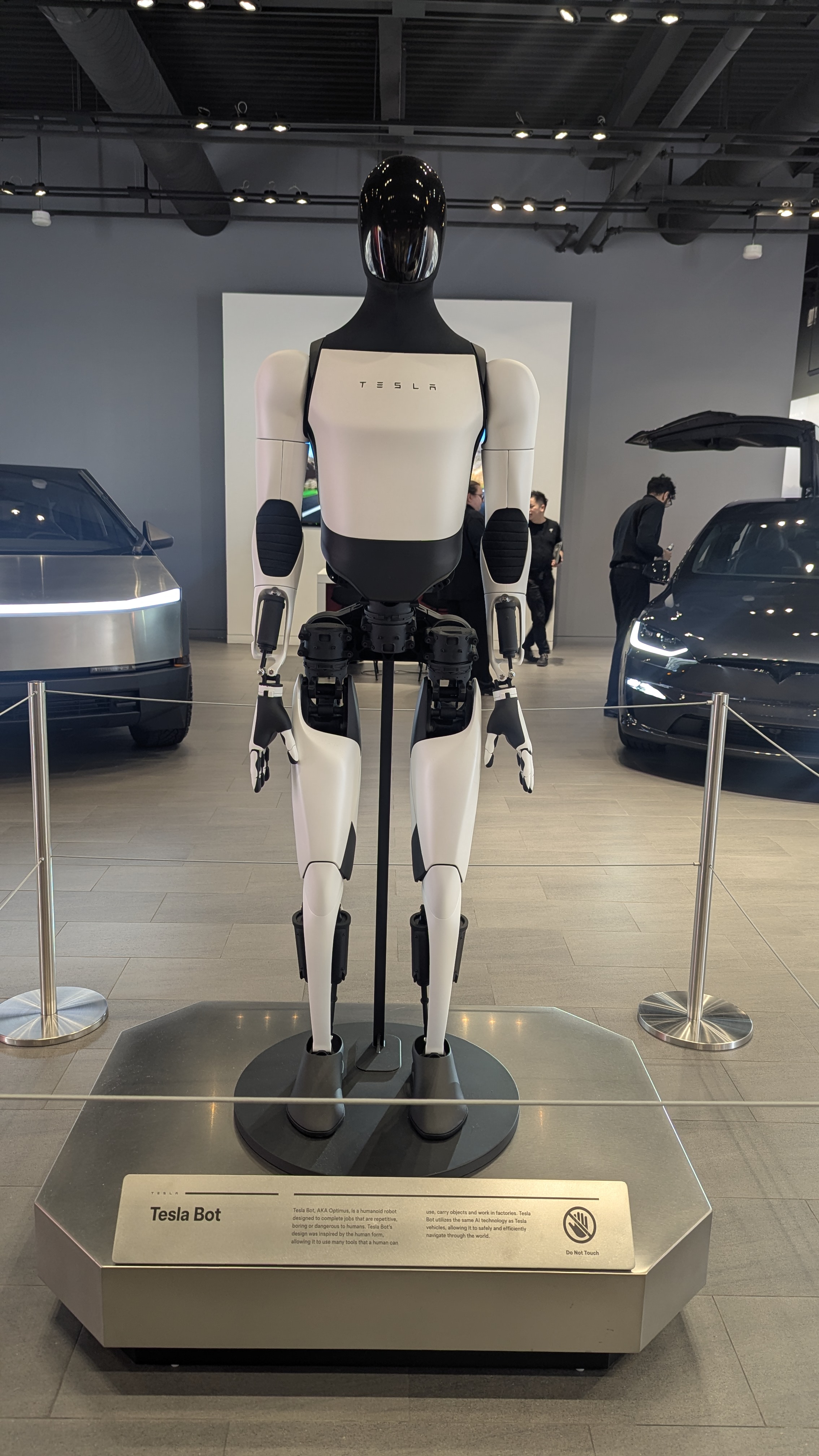
Robots Could Decimate Long-Term Care Costs: Are You Planning for the Real Future?
Mainstream analysis of elder care finances misses a seismic shift: the looming specter of affordable robotic caregivers.
The direct answer
The financial planning narrative for long-term care typically assumes a steady, linear increase in human caregiver costs. This perspective, often echoed in mainstream financial advice, fails to account for the impending disruption by humanoid robotics. While current projections focus on escalating wages and benefits for human labor, the integration of advanced robotics into caregiving roles promises to drastically reduce these expenses. Companies are already seeing strong traction in sectors that require significant infrastructure, like data centers and power infrastructure, suggesting a broader technological acceleration
What 60+ Managements Are Telling Us About FY27 Here is the sector wise FY27 guidance from Q4FY26 concalls, and what it actually means. Three clusters stand out with the most aggressive guidance: 1. Data centers and power infrastructure 2. Aerospace and defence 3. Renewables…
— LNPR Capital link
. This technological leap means the cost of round-the-clock care could plummet, challenging the very foundation of current long-term care insurance and savings models. Families planning for elder care need to look beyond traditional assumptions of human labor costs and factor in the potential for significantly cheaper, robot-assisted care within the next decade. The economic landscape of caregiving is about to be reshaped, and outdated financial models will leave many unprepared
🇨🇳 China's economy grew just 4.3% in the second quarter of 2026, marking its slowest pace in more than three years amid weak domestic demand. Retail sales rose only 1.0%, while property investment continued to decline, highlighting persistent challenges in consumption,…
— Asia Nexus link
.
The Linear Fallacy of Elder Care Costs
The prevailing wisdom in long-term care financial planning is built on a straightforward, albeit grim, projection: costs will continue to rise, driven by increasing demand and the escalating expense of human labor. This model assumes a predictable, almost linear, upward trajectory for expenses related to in-home assistance, nursing home care, and specialized medical support. Financial advisors often present these figures as immutable facts, urging clients to save aggressively for a future where personalized human care becomes prohibitively expensive. This perspective, however, fails to integrate the disruptive potential of emerging technologies. The economic shifts seen in sectors like data centers and renewable energy, which are attracting significant investment due to technological advancements
What 60+ Managements Are Telling Us About FY27 Here is the sector wise FY27 guidance from Q4FY26 concalls, and what it actually means. Three clusters stand out with the most aggressive guidance: 1. Data centers and power infrastructure 2. Aerospace and defence 3. Renewables…
— LNPR Capital link
, hint at a broader trend of innovation-driven cost reduction that is being overlooked in the elder care sector. The assumption that human labor will remain the primary, and most expensive, component of care is a dangerous oversimplification in an era of rapid AI development.
Robots: The Unexpected Cost-Cutting Solution
The advent of sophisticated humanoid robots is poised to fundamentally disrupt the long-term care landscape. These machines are moving beyond simple automation to perform complex tasks, including personal care, monitoring, and even companionship. As development accelerates and economies of scale kick in, the cost of deploying and maintaining robotic caregivers is projected to fall dramatically, potentially by orders of magnitude compared to human wages and benefits. Consider the rapid advancements and investment in sectors like aerospace and defense, which signal a robust economy capable of supporting high-tech development
What 60+ Managements Are Telling Us About FY27 Here is the sector wise FY27 guidance from Q4FY26 concalls, and what it actually means. Three clusters stand out with the most aggressive guidance: 1. Data centers and power infrastructure 2. Aerospace and defence 3. Renewables…
— LNPR Capital link
. This technological momentum is directly transferable to robotics. While China's economic growth shows some headwinds in domestic demand
🇨🇳 China's economy grew just 4.3% in the second quarter of 2026, marking its slowest pace in more than three years amid weak domestic demand. Retail sales rose only 1.0%, while property investment continued to decline, highlighting persistent challenges in consumption,…
— Asia Nexus link
, the global drive for automation in service industries is undeniable. This means that the 'unaffordable' cost of 24/7 care today could become significantly more accessible in the near future, challenging the necessity of current, high-premium long-term care insurance policies.
Rethinking Your 55+ Financial Strategy Now
For individuals and families approaching or within the 55+ demographic, this technological shift necessitates an immediate re-evaluation of long-term care financial planning. The traditional advice to secure the most comprehensive, and expensive, long-term care insurance policies may soon be misguided. Instead of solely focusing on hedging against escalating human labor costs, individuals should consider strategies that anticipate lower future care expenses due to automation. This could involve adjusting savings goals, exploring hybrid insurance models, or even investing in companies at the forefront of care robotics. The current economic climate, with its focus on infrastructure and technology growth
What 60+ Managements Are Telling Us About FY27 Here is the sector wise FY27 guidance from Q4FY26 concalls, and what it actually means. Three clusters stand out with the most aggressive guidance: 1. Data centers and power infrastructure 2. Aerospace and defence 3. Renewables…
— LNPR Capital link
, provides fertile ground for such innovations. Ignoring the potential of robotic caregivers is akin to planning a cross-country trip without acknowledging the existence of airplanes. The cost of care is not a fixed, linear progression; it's a variable poised for dramatic change.
Common mistakes
- Focusing solely on rising human labor costs for long-term care.
This ignores the disruptive potential of humanoid robotics, which are poised to dramatically lower caregiving expenses, rendering traditional linear cost projections obsolete and potentially leaving individuals over-insured or under-prepared for a different economic reality. - Treating long-term care cost projections as immutable facts.
The financial industry's narrative is often based on historical trends of human labor costs. This fails to account for technological innovation, such as AI-driven robotics, which can fundamentally alter the cost structure of caregiving services, creating a deflationary pressure not currently factored into most plans. - Underestimating the speed of technological adoption in service industries.
While economic growth continues in certain sectors [c2], the pace of innovation in robotics and AI suggests a faster integration into caregiving than many financial models anticipate. This lag in planning could lead to missed opportunities for more cost-effective solutions.
What 60+ Managements Are Telling Us About FY27 Here is the sector wise FY27 guidance from Q4FY26 concalls, and what it actually means. Three clusters stand out with the most aggressive guidance: 1. Data centers and power infrastructure 2. Aerospace and defence 3. Renewables…
— LNPR Capital link
, and even a rebound in manufacturing supply chains
$VELO : Lake Street - Strong beat with GM rebounding, RPS traction continues; 2026 still set to be inflection year; reiterating buy rating and raising PT to $20
— Tut C🅰️pital link
, the discourse around elder care remains stubbornly anchored to human labor. The projected rise in Real GDP, for instance, doesn't capture the potential deflationary impact of automation on service industries like caregiving
Canada's Real GDP by Industry – April 2026 (StatsCan release) 📈Headline: Real GDP rose 0.5% in April, rebounding from a 0.1% drop in March. Both goods-producing (+1.2%) and services-producing (+0.3%) industries contributed. 14 of 20 sectors grew. Top Drivers: Mining, quarrying…
— cbcwatcher link
. Families are being sold a future of ever-increasing bills, when a future of dramatically reduced costs, driven by AI and robotics, is far more likely and demands immediate attention in their financial strategies.
Frequently asked
How quickly will robots realistically impact long-term care costs?
While precise timelines are difficult, significant integration is expected within the next 5-10 years. Early adopters are already seeing benefits in other high-tech sectors [c2], indicating a rapid development cycle. Families should begin factoring this potential cost reduction into their long-term financial strategies now, rather than waiting for widespread adoption.
Should I cancel my long-term care insurance if robots will do the job?
Not necessarily. While robotic care may reduce costs, it's unlikely to eliminate the need for comprehensive planning. Consider hybrid policies or re-evaluating the coverage levels of your existing policy. The goal is to align your plan with the *emerging* cost structure, not to abandon planning altogether. Focus on policies that offer flexibility.
What specific actions can I take today to prepare for robotic caregivers?
Research companies developing care robotics. Discuss with your financial advisor the possibility of adjusting your long-term care insurance premiums or coverage to reflect potential future cost decreases. Stay informed about technological advancements and regulatory changes in elder care technology.


