
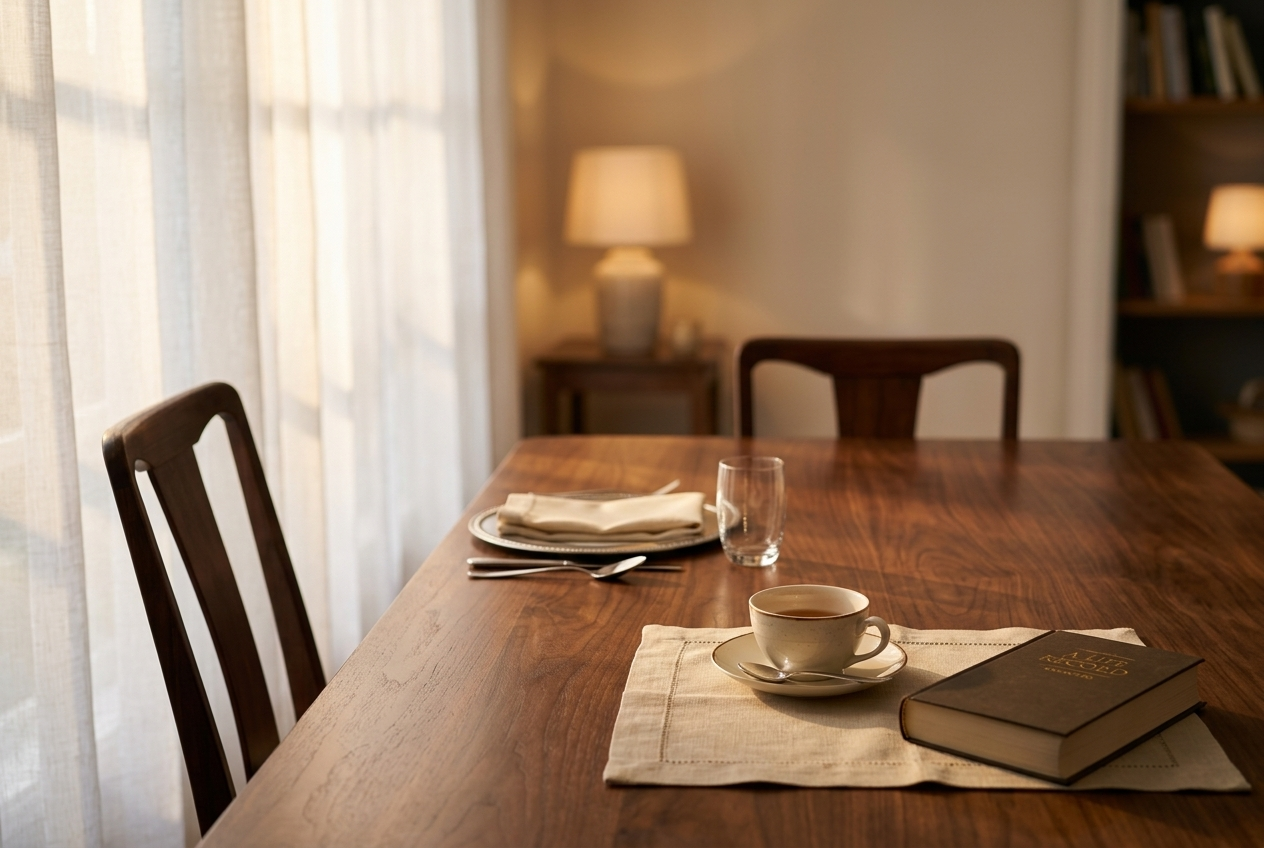
Your Kids Do Not Want Your Dining Room Set (And Other Hard Truths of Downsizing)
How to edit your life before someone else does it for you, on your terms and your budget.
In 1950, the average American home was 983 square feet. Today, it is over 2,500 square feet, stuffed with thirty-year-old tax returns, half-empty paint cans, and a solid oak dining table that your adult children have already quietly agreed they will sell on Facebook Marketplace the moment you are gone. We do not own our things; our things own us, demanding property taxes, roof repairs, and weekend afternoons spent dusting. If you are over 55, downsizing is not a defeat. It is a preemptive strike against the inevitable chaos of a forced move.
The direct answer
The ideal window to downsize is between ages 55 and 65, while you still have the physical stamina and emotional energy to make your own decisions. Waiting until a crisis forces a move means you will pay a premium for emergency labor, accept fire-sale prices for your home, and let strangers decide where your life's treasures end up. Do it when you want to, not when you have to.
The High Cost of Sentimental Real Estate
Let us do some cold math. If you are holding onto a four-bedroom house just because it holds your memories, you are paying a massive premium for storage. The average cost of maintaining a home is about 1% to 4% of its value annually.
In a $600,000 home, that is up to $24,000 a year spent on keeping empty rooms warm, mowing a lawn you rarely sit on, and repairing a roof that covers space you do not use. That is money that could be funding your retirement, travel, or better living arrangements.
Now consider the market value of your sentimentality. That 1980s mahogany china cabinet you bought for $3,000 is worth approximately $150 today. Millennials and Gen Z do not want heavy, dark wood furniture; they want flat-pack items that fit into apartments they will rent for the next decade.
Keeping a large house just to store furniture that nobody else wants is an expensive form of denial. Instead, choose five items that actually tell your story. Take high-resolution digital photos of the rest, compile them into a book, and donate the physical items. Your legacy is not preserved in varnished pine; it is preserved in the freedom you give yourself to live easily in the present.
The Timeline: Why 60 is the New Deadline
There is a physical reality to decluttering that most people ignore. Lifting boxes, taping cartons, climbing attic stairs, and driving to donation centers requires physical stamina. If you wait until you are 75 or 80, arthritis, spinal stenosis, or general fatigue will turn a three-week project into an agonizing six-month ordeal.
When you downsize in your late 50s or early 60s, you are in control. You can take your time, drink wine on the floor while sorting through old photo albums, and make rational decisions about what stays and what goes. You also get to enjoy the financial upside of your move for decades, reinvesting the equity from your home sale into assets that actually pay you back.
If you wait, you hand that control to your children or, worse, to a court-appointed administrator. They will not have the time to look through your college scrapbooks. They will hire a dumpster, pay $800 for a junk removal service, and throw it all away in a single weekend because they have their own jobs and families to manage.
The Three-Pile Rule That Actually Works
Forget the complicated organizational systems you see on television. You do not need color-coded stickers or complex flowcharts. You only need three categories: Keep, Gift Now, and Trash.
There is no 'Maybe' pile, because 'Maybe' is just a slow way of saying 'Keep' and stalling your progress.
The 'Gift Now' pile is crucial. If you want your daughter to have your grandmother’s silver, give it to her now, while you are alive to see her use it. If she says she does not want it, accept that answer gracefully and sell or donate it. Do not force her to feel guilty about donating it after you are gone.
For the 'Keep' pile, apply the one-year rule. If you have not touched, worn, or looked at an item in the last twelve months, it does not get to occupy space in your new, smaller life. The only exceptions are legal documents, passport records, and tax returns from the last seven years.
The Financial Reality of the Next Step
Downsizing is not just about getting rid of stuff; it is about preparing your physical space for the next twenty years. If you choose to stay in your current home but want to adapt it for safety, a professional CAPS aging-in-place Assessment can tell you exactly what modifications you need. Palmelle offers this Assessment for $399, providing a clear blueprint for things like curbless showers, wider doorways, and smart lighting that prevent falls before they happen.
If you decide to move to a care facility or a smaller condo, you need real data, not marketing brochures. Paid referral platforms like A Place for Mom, Caring.com, and SeniorAdvisor look free, but they operate on commissions. They will only show you facilities that pay them a cut, which means you miss out on some of the best local options.
To get an unbiased view, look at the Palmelle Clarity Score. This 0-100 score is computed from federal CMS and state inspection data, giving you an honest, unvarnished look at how a facility actually performs when the inspectors visit. If you need help sorting through the noise, Palmelle's Help Me Choose service costs $199 and matches you with options based on hard data, not sales pitches.
Common mistakes
- Relying on paid referral sites for facility recommendations
Platforms like A Place for Mom or Caring.com omit excellent care facilities simply because they do not pay commissions. Instead, use the Palmelle Clarity Score, which uses federal CMS and state inspection data to rank facilities objectively. - Keeping things because 'they might be worth something someday'
The market for antiques and collectibles has collapsed as younger generations prioritize mobility over material possessions. Holding onto items hoping for a price rebound wastes valuable space and costs you more in home maintenance than the items will ever be worth.
Frequently asked
How do I start downsizing when I feel completely overwhelmed?
Start with one small, low-emotion area, like a single bathroom drawer or a coat closet. Do not start with the photo albums or the attic, which are emotional minefields. Spend just twenty minutes a day on this, and build momentum before tackling the basement.
What is the difference between a nursing home and other care options?
A nursing home provides 24-hour nursing and personal care, while other options like memory care focus specifically on cognitive support. Understanding these distinctions early helps you choose the right environment. You can use our Help Me Choose service for $199 to find the right fit based on your specific needs.
How can I modify my current home to avoid moving at all?
Focus on zero-step entries, wider doorways (at least 32 inches), and curbless walk-in showers. You can hire a certified professional to evaluate your home, or book a Palmelle Assessment for $399 to get a detailed list of recommended modifications and local contractor referrals via /home-services.
Sources
More from Your Own Future → · Back to Perch · Browse all stories