
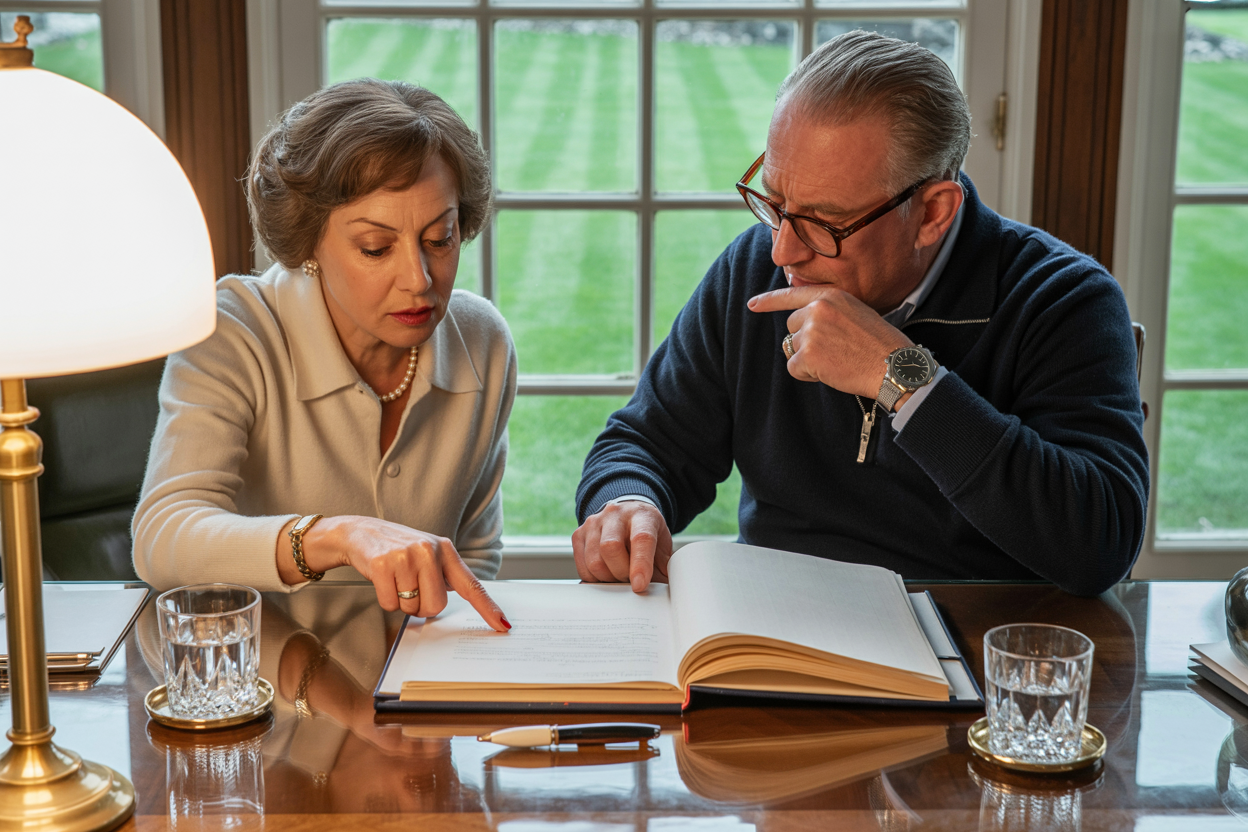
The Stepfamily Estate Trap: Why Good Intentions Leave the Wrong People Broke
If you rely on standard reciprocal wills, your biological kids might end up with nothing—and it's completely legal.
In most states, if you die and leave everything to your spouse, your biological children have exactly zero legal right to a single dime of that money. When your spouse dies years later, their own children—your stepchildren—can inherit the entire estate, including your family heirlooms and the house your parents left you. This is not a horror story about cruel step-parents; it is the default setting of American estate law. If you have a blended family and a standard "what's mine is yours" will, you have set up a financial time bomb.
The direct answer
To protect both your spouse and your children from a previous relationship, you cannot rely on simple reciprocal wills or verbal promises. You must use a structural legal barrier, typically a Qualified Terminable Interest Property (QTIP) trust or an irrevocable trust, which provides for your spouse during their lifetime but legally guarantees the remaining assets revert to your biological children. This separation of rights ensures your spouse is supported while preventing your children from being written out of your legacy.
The Devastating Math of the Reciprocal Will
Most couples walk into an attorney's office and ask for simple reciprocal wills. These documents say, "If I die, everything goes to my spouse, and if we both die, it gets split equally among all our kids." On paper, this feels fair, loving, and refreshingly simple. In practice, it is a high-stakes gamble where your biological children are the ones holding the losing ticket.
The problem is that wills are entirely revocable during the lifetime of the person who wrote them. The moment you die, your surviving spouse's will is their own business, and they can change it the very next day. If they remarry, or simply grow distant from your children as the years pass, they can draft a new will that completely excludes your biological kids. Your kids cannot contest this; they have no legal right to an inheritance from a step-parent.
This is rarely born of malice. Sometimes it is sheer logistics: your surviving spouse lives another fifteen years, relies on their own biological kids for daily help as they age, and naturally decides to reward that care. Meanwhile, your children are left wondering how their parent's entire life's work vanished into another family's bank account. If you want to make sure your children inherit your portion of the assets, you must accept that trust is not a legal strategy.
The QTIP Trust: How to Care for Your Spouse and Protect Your Heirs
The most elegant tool for solving this dilemma is the Qualified Terminable Interest Property trust, commonly known as a QTIP trust. It allows you to look after your surviving spouse without giving them ultimate control over where the money goes when they die. It splits the benefit of your assets from the ownership of those assets.
Here is how it works: when you die, your assets go into the QTIP trust. The trust pays out all the income generated by those assets to your surviving spouse for the rest of their life, and can even pay out principal for specific needs like care facility fees or daily living expenses. However, your surviving spouse cannot change the final beneficiaries of the trust. When they die, the remaining money automatically goes to your biological children, exactly as you wrote it down.
Setting up this kind of trust does require upfront work and attorney fees, but it is the only way to prevent a lifetime of family resentment. If you are looking to audit your overall aging plan before diving into complex trusts, a Palmelle CAPS aging-in-place Assessment for $399 can help you look at how your physical home and financial layout fit together. It is an excellent first step to understanding what assets you actually need to protect before you sit down with an estate attorney.
Why Beneficiary Designations Are the Stealth Saboteurs
You might have a beautifully drafted trust, but it will not mean a thing if your life insurance and retirement accounts are set up incorrectly. These accounts bypass your will and your trust entirely, transferring directly to whoever is named on the beneficiary form. If you named your spouse as the primary beneficiary on your 401k twenty years ago, that money belongs entirely to them the second you stop breathing.
They can roll it into their own IRA, name their own children as beneficiaries, and your kids will never see a dime of that retirement nest egg. Under federal law, spouses even have automatic rights to 401k plans unless they sign a physical waiver. To fix this, you must coordinate your beneficiary designations with your trust, or split the percentages directly on the form—for example, designating 50% to your spouse and 50% to your biological children.
Never assume that your lawyer coordinated these forms for you. Most estate attorneys do not update your financial accounts; they just draft the trust and leave the paperwork to you. If you need hands-on support organizing these physical files and coordinating local services, our team can guide you through our Home Services at /home-services.
Common mistakes
- Relying on verbal agreements with your spouse.
You might think your spouse would never cut your kids out, but cognitive decline, second marriages, and family rifts change people. If it is not written into a legally binding contract or trust, the promise does not exist in the eyes of the law. - Leaving everything to your kids as co-owners of real estate with your spouse.
Forcing your second spouse and your adult children to co-own a house is a recipe for litigation. One group will want to sell, the other will want to live there, and the courts will end up making the decision for you while draining the equity in legal fees.
Frequently asked
Can my spouse change their will to exclude my kids after I die?
Yes, absolutely. Unless you have a contract to make a will or a trust in place, your surviving spouse has full legal authority to change their own will and leave everything to their own children, a new partner, or a charity. Your biological children have no legal grounds to contest this change simply because they are your kids.
What is the difference between a QTIP trust and a standard living trust?
A standard revocable living trust usually becomes completely controlled by the surviving spouse after the first spouse dies, allowing them to change beneficiaries. A QTIP trust restricts the surviving spouse's ability to change the ultimate beneficiaries of your specific share of the assets, preserving them for your children while still funding your spouse's lifestyle.
How do we handle the family home in a stepfamily estate plan?
The cleanest way is to grant your spouse a 'life estate' in the home, which lets them live there until they die or move into a care facility. After that, the home automatically belongs to your biological children, preventing your spouse from selling it and keeping all the equity for their own heirs.
Sources
More from Your Own Future → · Back to Perch · Browse all stories