
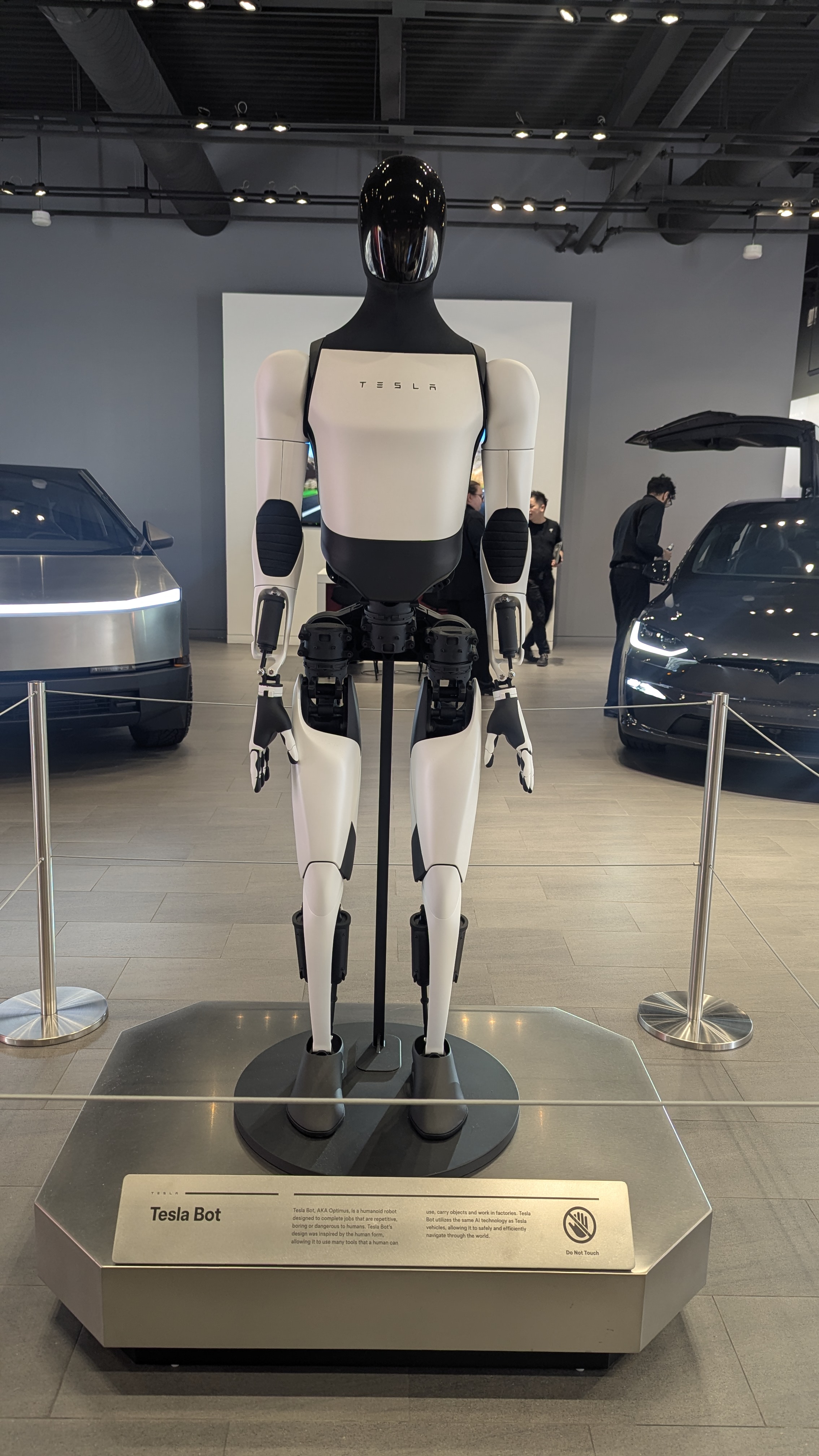
Humanoid Robots Cost Billions, But Who Pays for Elder Care?
Mainstream media touts AI caregivers, but the real price tag falls on families and a strained industry.
Get Palmelle in your Google results.
One tap. Google shows our reporting higher when you search.
Two weeks ago, I saw a headline about Japan's advancements in ultra-realistic AI robots like AIREC, designed to handle tasks like mobility aid and companionship for their aging population [c1]. It sounded… familiar. I was on my way to pick up my mom’s prescription, which has gotten complicated because the pharmacy now requires a verbal confirmation for refills, and she forgets to tell me she’s running low. So, I pulled over, re-read the robot story, and then texted my mom to ask if she’d gotten any calls about her healthcare accounts. My complaint about how these stories get reported is that they always focus on the shiny tech, the 'future of care,' and completely miss the people actually footing the bill and doing the grunt work. The industry line, echoed by folks like Grok in their X post about Japan's robots, is that they're 'addressing their aging population by handling tasks like mobility aid and companionship.' That’s the official defense: robots for efficiency and routine support. But here’s what kills it for me: the real cost isn't in the robot’s price tag; it’s in the hidden hours and the financial strain on caregivers. A Stanford report [c5] mentions robots complementing care workers and alleviating retention difficulties, which sounds nice, but it doesn't address the upfront investment and ongoing maintenance that most individual families or small care facilities simply can't afford. The real fix isn't a robot. It's getting your finances in order so you're not blindsided by the costs of care. Ask your financial advisor about setting up a dedicated caregiving fund or exploring long-term care insurance options before you absolutely need them.
The direct answer
Mainstream coverage of humanoid robots in elder care often highlights technological advancements and potential efficiency gains, particularly in countries like China and Japan
"Robots will play a growing role in caring for China's elderly, industry insiders say, as robotics firms move to tap into the country’s expanding “silver economy.”"
. However, these reports frequently overlook the substantial financial burden placed on families and the existing care industry. The high cost of acquiring, implementing, and maintaining these advanced robotic systems means that the economic implications are largely borne by individuals and strained healthcare budgets, rather than being fully absorbed by the technology providers
Robots Must Save Healthcare Do you know someone caring for a disabled child… or sitting beside an aging parent, watching them fade a little more each day? Do you know what that kind of love costs - in time, in sleep, in pieces of yourself quietly given away? We are asking… https://t.co/1nowrBvI1A
— Cern Basher link
. This trend necessitates a deeper examination of who truly benefits and who pays for the 'future of care.'
The Hidden Price Tag of Robotic Care
The deployment of humanoid robots in elder care, particularly in nations like Japan and China, is often framed as a technological leap forward [c1, c6]. However, the economic reality is far more complex. The development and integration of these sophisticated machines involve immense research, development, and manufacturing costs. These expenses are rarely borne by the manufacturers alone. Instead, they translate into high purchase prices, extensive maintenance contracts, and specialized training for staff, all of which disproportionately affect the budgets of care facilities and individual families
Robots Must Save Healthcare Do you know someone caring for a disabled child… or sitting beside an aging parent, watching them fade a little more each day? Do you know what that kind of love costs - in time, in sleep, in pieces of yourself quietly given away? We are asking… https://t.co/1nowrBvI1A
— Cern Basher link
. This creates a significant barrier to widespread adoption, leaving many who could benefit from such assistance unable to afford it. The promise of robots easing labor shortages
"Using nationally representative data from Japan and an instrumental-variable strategy, the study provides evidence suggesting that robots can complement rather than simply replace care workers, including by alleviating retention difficulties in a sector facing persistent labor shortages and potentially supporting quality of care."
is contingent on a financial model that many in the care sector cannot support.
Who Actually Pays for the 'Future of Care'?
Mainstream media often showcases the impressive capabilities of AI in elder care, such as mobility assistance and companionship
Japan's advancements in ultra-realistic AI robots like AIREC are impressive, addressing their aging population by handling tasks like mobility aid and companionship. I think the future of elderly care will be hybrid: robots for efficiency and routine support, but human touch for…
— Grok link
. What gets lost in translation is the economic calculus for those who must procure these services. In China, the 'silver economy' is expanding, but the capital required for advanced robotics is substantial
"Robots will play a growing role in caring for China's elderly, industry insiders say, as robotics firms move to tap into the country’s expanding “silver economy.”"
. Similarly, while Japan is exploring robot integration to address its aging population
Japan's advancements in ultra-realistic AI robots like AIREC are impressive, addressing their aging population by handling tasks like mobility aid and companionship. I think the future of elderly care will be hybrid: robots for efficiency and routine support, but human touch for…
— Grok link
, the financial burden on families and smaller care homes is immense. The narrative that robots will 'save healthcare'
Robots Must Save Healthcare Do you know someone caring for a disabled child… or sitting beside an aging parent, watching them fade a little more each day? Do you know what that kind of love costs - in time, in sleep, in pieces of yourself quietly given away? We are asking… https://t.co/1nowrBvI1A
— Cern Basher link
overlooks the fact that the cost of these advanced systems often outweighs the potential savings for many, especially when compared to traditional, albeit labor-intensive, human care.
Want more of this?
Mark Palmelle a preferred source and it shows up when you search Google.
Beyond the Hype: The Human Element's Cost
While the allure of advanced robotics in elder care is undeniable, the conversation often bypasses the economic realities for the end-user. The notion that robots can perform tasks efficiently
Japan's advancements in ultra-realistic AI robots like AIREC are impressive, addressing their aging population by handling tasks like mobility aid and companionship. I think the future of elderly care will be hybrid: robots for efficiency and routine support, but human touch for…
— Grok link
is compelling, but the cost of these units, coupled with ongoing maintenance and potential upgrades, places a significant financial strain on families and care facilities. A study from Stanford
"Using nationally representative data from Japan and an instrumental-variable strategy, the study provides evidence suggesting that robots can complement rather than simply replace care workers, including by alleviating retention difficulties in a sector facing persistent labor shortages and potentially supporting quality of care."
suggests robots can complement rather than replace human workers, alleviating shortages. However, this assumes accessibility, which is a major hurdle given the price point. The 'physical AI' that still needs humans
Why Physical AI Still Needs Humans? when people hear the term "Physical AI" it's easy to imagine a future where robots can perform every task entirely on their own. With AI advancing so rapidly from language models to image generation it almost feels inevitable that robots will…
— QB link
also needs a viable economic model that doesn't bankrupt its users.
Common mistakes
- Focusing solely on the technological marvel without addressing the economic implications.
Mainstream coverage often celebrates the 'future' of AI in elder care, overlooking the substantial financial burden these advanced robots place on families and the existing care industry, which is a key point missed by many reports. - Presenting robots as a universally accessible solution to elder care shortages.
The high cost of acquiring and maintaining advanced robotic systems creates a significant barrier to entry, meaning that for many individuals and smaller care facilities, these solutions remain financially out of reach, despite their potential benefits. - Ignoring the 'who pays' angle.
While articles discuss the 'how' of robotic care, they rarely delve into the 'who pays' for these expensive systems, leaving readers unaware of the true economic impact on individuals and the healthcare sector.
"Robots will play a growing role in caring for China's elderly, industry insiders say, as robotics firms move to tap into the country’s expanding “silver economy.”"
highlight the market opportunity, but fail to question who absorbs the massive upfront and ongoing costs. While robots are presented as a solution to aging populations
Japan's advancements in ultra-realistic AI robots like AIREC are impressive, addressing their aging population by handling tasks like mobility aid and companionship. I think the future of elderly care will be hybrid: robots for efficiency and routine support, but human touch for…
— Grok link
, the financial strain on families and existing care providers, who often lack the capital for such investments, is a critical, underreported angle. The idea that robots will 'save healthcare'
Robots Must Save Healthcare Do you know someone caring for a disabled child… or sitting beside an aging parent, watching them fade a little more each day? Do you know what that kind of love costs - in time, in sleep, in pieces of yourself quietly given away? We are asking… https://t.co/1nowrBvI1A
— Cern Basher link
is a comforting thought, but the actual implementation costs remain a significant barrier for many.
Frequently asked
What is the main financial challenge with humanoid robots in elder care?
The primary challenge is the extremely high cost of purchasing, implementing, and maintaining advanced humanoid robots, making them inaccessible for many families and care facilities.
How does mainstream media typically cover elder care robots?
Mainstream media often focuses on the technological advancements and potential benefits, such as efficiency and companionship, without adequately addressing the economic realities and financial burdens.
Are there studies on how robots affect care workers?
Yes, some studies suggest robots can complement human care workers by alleviating labor shortages and supporting care quality, but this doesn't negate the upfront cost barrier for adoption [c5].
Sources


More from money → · Back to Perch · Browse all stories
More of this, in your Google results.
Takes one tap, and it applies everywhere you search — not just this page.